
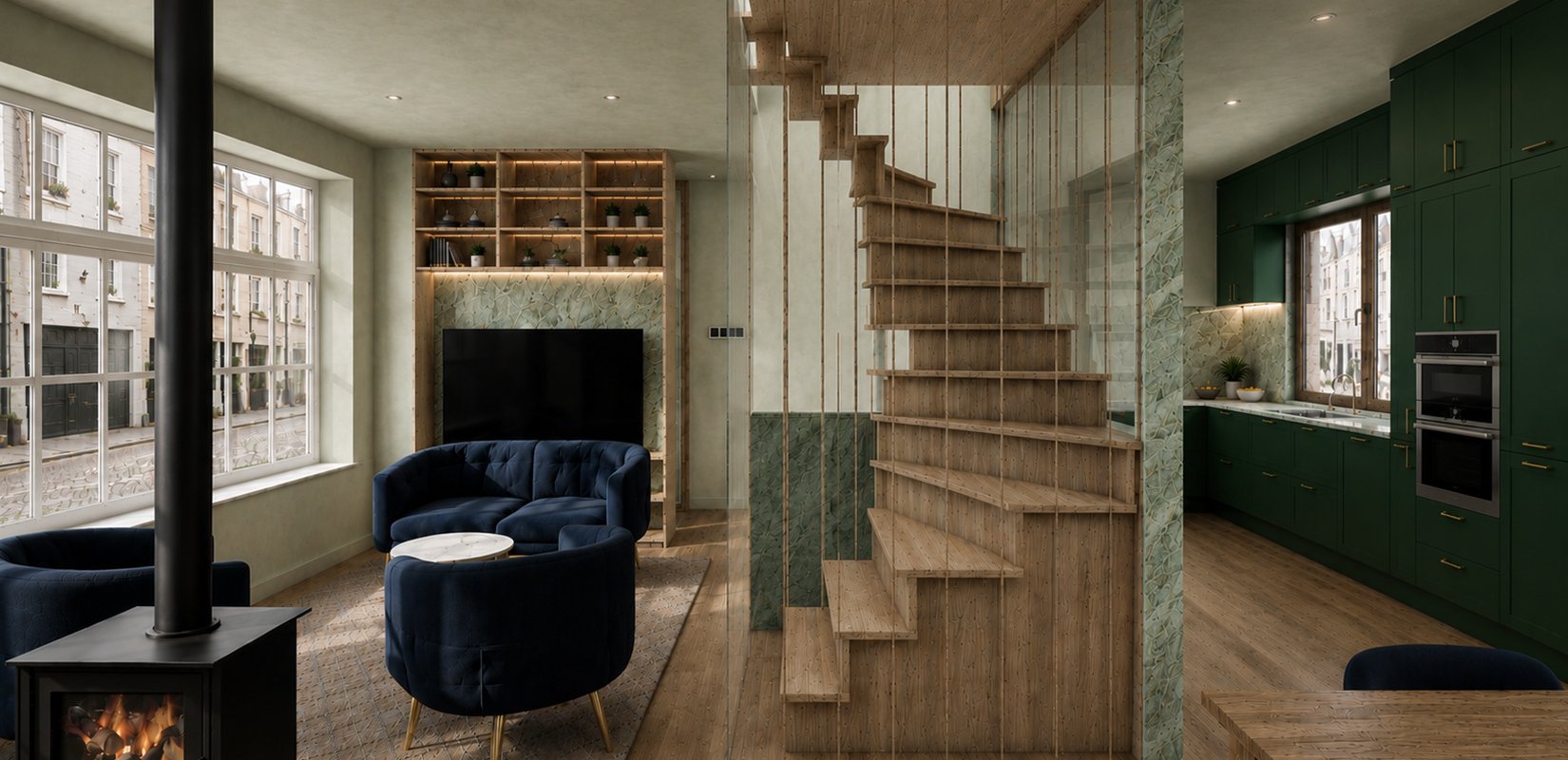
Bayswater is one of those parts of London where the quality of the architecture raises the responsibility of the work. The grand stucco terraces, garden squares, and mews houses hidden behind the primary streets carry a quiet permanence. These are buildings shaped by proportion, rhythm, craftsmanship, and civic generosity. They deserve to be adapted with equal care.
Positioned between Notting Hill, Paddington, and Kensington Gardens, Bayswater has a calmer and more residential character than many of its neighbouring districts. Much of the area sits within Westminster’s conservation framework, one of the most rigorous planning environments in London. Designing here requires architectural sensitivity, technical expertise, and a genuine understanding of how historic buildings perform over time.
Working With Bayswater’s Historic Building Fabric
Bayswater’s residential identity is defined largely by Victorian and Edwardian stucco terraces: generous ceiling heights, elegant proportions, tall sash windows, and a restrained palette of painted render, black ironwork, and timber detailing that has endured for more than a century.
These homes possess qualities rarely replicated in contemporary development. The proportions are generous, the sequence of spaces feels remarkably intelligent, and the relationship to gardens and shared green space gives the area a calmness uncommon in central London.
What these buildings were never designed for, however, was modern energy performance. Solid masonry walls, uninsulated floors, uncontrolled air leakage, and outdated heating systems often leave them uncomfortable, inefficient, and expensive to run.
The challenge is improving performance without losing the character that makes the buildings valuable in the first place.
Our approach is rooted in EnerPHit and Passivhaus principles: carefully upgrading the existing fabric to dramatically improve comfort, airtightness, thermal performance, and indoor air quality while respecting the architectural integrity of the original building.
This often includes:
- high-performance insulation at roof, wall, and floor level
- airtight construction strategies
- thermally efficient glazing designed to retain original proportions
- MVHR systems delivering filtered fresh air throughout the home
- low-energy heating systems such as underfloor heating and air source heat pumps
On a recent mews townhouse retrofit nearby, we transformed the building’s performance through continuous insulation, airtight detailing verified through pressure testing, MVHR, and low-temperature heating systems. The architectural character remained intact, but the experience of living inside the house changed entirely: quieter, healthier, warmer in winter, cooler in summer, and substantially more energy efficient.
Conservation Areas and Westminster Planning
Large parts of Bayswater fall within Westminster conservation areas, with many buildings also individually listed. Westminster expects a serious architectural and conservation argument. Applications that treat heritage as a constraint rather than a source of value rarely succeed.
Our approach begins with careful research into the history of the building, the rhythm of the street, and the wider urban context. We study how a terrace was originally composed, how neighbouring buildings have evolved, and where opportunities exist for meaningful intervention without undermining character.
The strongest planning applications are not simply compliant. They contribute something thoughtful and lasting to the architectural story of the area.
For homeowners considering a project in Bayswater, it is worth reviewing an architect’s planning track record before appointment. Westminster’s planning portal is publicly accessible, and previous approvals often reveal far more about a practice’s capability than polished imagery alone.
Designing Around Light, Landscape, and Nature
The presence of Kensington Gardens shapes how many Bayswater homes experience light, greenery, and outdoor space. Even in dense urban conditions, the relationship between architecture and landscape remains fundamental.
We think carefully about how spaces connect to gardens, terraces, courtyards, and planted areas from the earliest stages of design. Openings are positioned to borrow light deeply into the plan. Materials are selected to age gracefully. Planting is treated as part of the architecture rather than decoration applied afterwards.
The garden squares across Bayswater also offer an important lesson in shared urban living: density works best when connected to landscape, biodiversity, and moments of calm.
Increasingly, our projects integrate green roofs, sustainable drainage systems, native planting, and biodiversity measures that strengthen ecological resilience within the city.
Sustainability and Long-Term Value
Clients in Bayswater increasingly understand the connection between environmental performance and long-term property value. A well-insulated home with low running costs, excellent air quality, and future-ready systems is becoming materially more valuable than inefficient housing stock reliant on outdated technologies.
We apply Passivhaus thinking to every project from the earliest design stages:
- modelling energy performance before construction begins
- prioritising fabric performance before systems specification
- selecting materials with lower embodied carbon where possible
- integrating renewable technologies carefully within the planning context
Solar PV, heat pumps, battery storage, and rainwater harvesting systems are incorporated wherever the architecture and conservation setting allow.
The embodied carbon argument for retrofit is equally significant. Bayswater’s terraces already contain enormous amounts of invested material and energy. Retrofitting and extending these buildings carefully is almost always more environmentally responsible than demolition and rebuild, while producing homes with far greater depth, texture, and longevity.
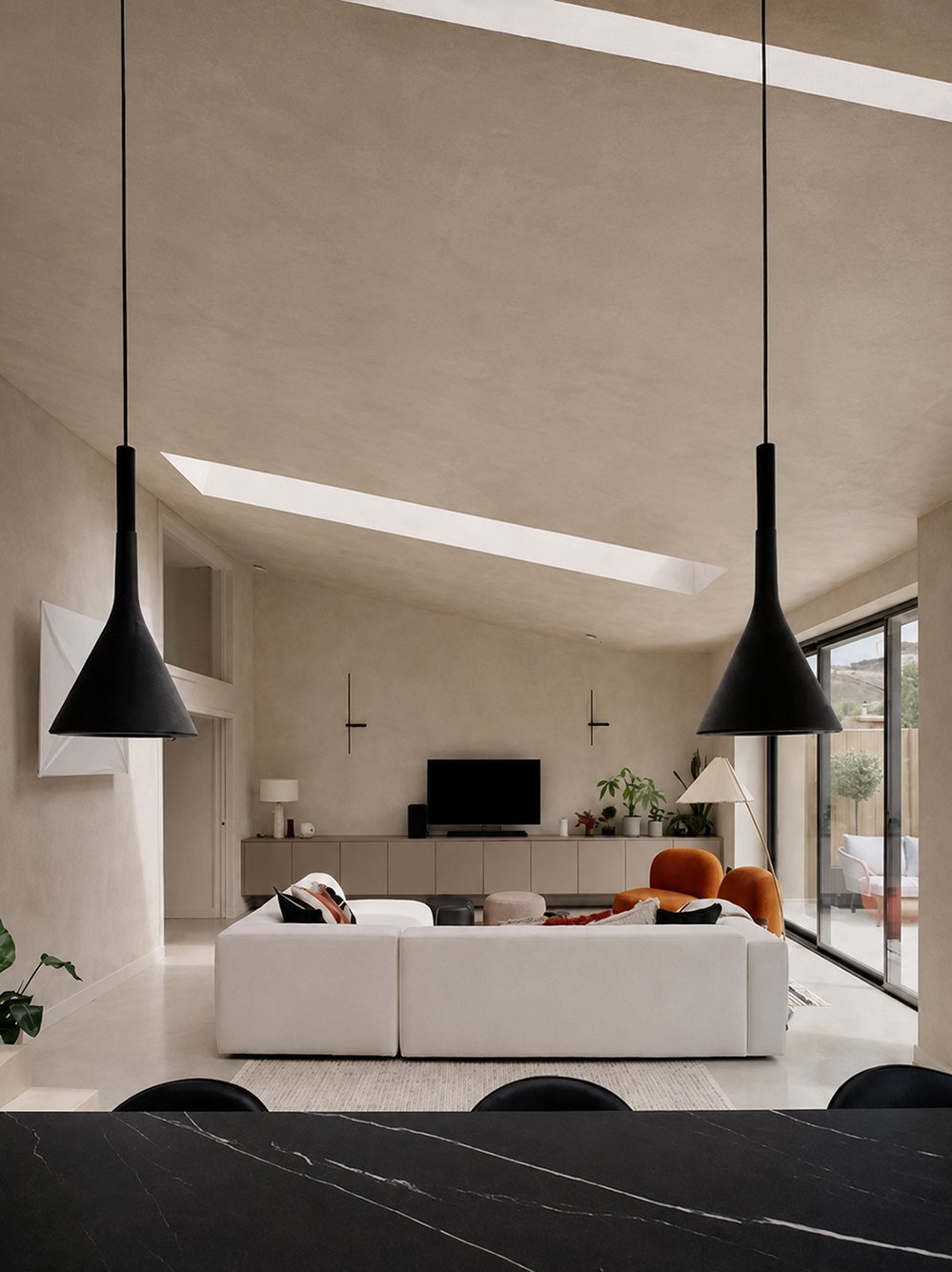
Working With RISE Design Studio in Bayswater
At RISE Design Studio, we work across the full scope of architectural services: feasibility studies, planning applications, conservation strategy, technical design, interior architecture, tender coordination, and contract administration through construct
ion.
We are direct about budgets, timelines, and planning risk from the outset. If a brief and budget are misaligned, we say so early. If the planning context presents genuine challenges, we explain them honestly and strategically.
The best projects emerge through clarity, trust, and a shared ambition to create buildings that endure.
If you are planning a project in Bayswater, whether a careful retrofit, a mews transformation, or a heritage extension within Westminster’s conservation framework, we would be glad to explore what is possible.