
Share this
by Sean Ronnie Hill on Feb 13, 2026
What the April 2026 planning appeals reforms mean for homeowners and developers
From 1 April 2026, the way planning appeals work in England will change fundamentally. If your application is refused after that date, the Inspector deciding your appeal will only consider what your local planning authority already saw. No new reports. No additional arguments. No second chance to make the case you should have made the first time.
For well-prepared applications, this is good news: faster decisions, lower costs, less uncertainty. For the underprepared ones, it's a significant risk.
Here's what's changing, why it matters, and how to position your project for success under the new system.
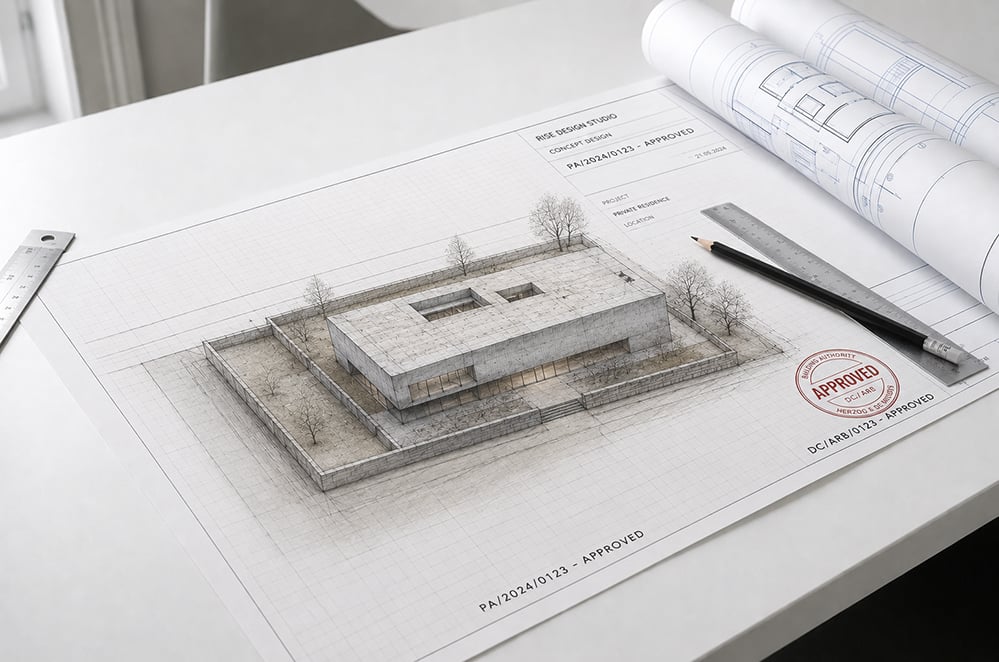
From April 2026, the streamlined Part 1 appeals procedure rewards comprehensive initial submissions - getting it right the first time means faster approvals and less bureaucracy.
The government's new streamlined Part 1 appeals procedure is built on a single principle: your original application is your case. Full stop.
Under the old system, a refused planning application was often just the opening move. Appellants could commission new technical studies, strengthen their heritage argument, or address highway concerns raised in the refusal notice. The appeal became a second bite of the cherry.
That's over.
From April 2026, the Planning Inspectorate will make its decision based solely on the documents submitted with your original application. What you put in front of your local planning authority is what gets assessed - nothing more, nothing less.
Before April 2026: Application refused → Submit appeal → Commission new reports and prepare additional statements → Inspector considers everything, old and new → Decision in 6 to 12+ months
After April 2026 (most appeals): Application refused → Submit appeal using original documents only → Inspector considers only what the council saw → Decision typically within weeks
The upside is real: faster decisions, lower professional fees, less time in limbo. But the stakes on your initial submission are now considerably higher.
Why This Is Good News for Prepared Applicants
Faster decisions
The most immediate benefit is speed. Appeals that previously dragged on for the better part of a year can now be resolved in weeks. For homeowners, that means less disruption to plans, lower holding costs, and a quicker route to getting on site.
Fewer professional fees
The old appeals process was expensive. Preparing new technical reports, commissioning specialist assessments, drafting lengthy statements of case - all of that added up quickly. Under the new system, your appeal cost is substantially reduced because there's nothing new to produce.
A more honest process
There's a certain logic to this reform. Planning decisions should be made on complete information. The new system creates a strong incentive for both applicants and councils to get it right the first time - which in practice means more thorough pre-application engagement and more considered decision-making on both sides.
What Stays the Same
The streamlined process applies to most appeals, but not all. The traditional procedure - with the option to submit new evidence - still applies when:
- Your local authority failed to make a decision within the statutory time limit (non-determination)
- You're appealing a listed building consent refusal
- The case involves complex issues requiring a hearing or public inquiry
- There has been a significant change in circumstances since your application - major policy changes, relevant court judgments, or new environmental assessment requirements
These exceptions are narrow and assessed case-by-case. Don't build your strategy around them.
What This Means for Your Project Right Now
The reform doesn't change what good planning looks like - it just removes the margin for error. If you're submitting after 1 April 2026, your approach needs to shift in one direction: front-load everything.
Before you submit:
- Engage with planning officers early. Understand their concerns before you're in the formal process.
- Commission all technical reports upfront - heritage, ecology, highways, sustainability. Don't phase them.
- Make your Design and Access Statement a complete, compelling document, not a box-ticking exercise.
- Address anticipated objections proactively. If you know the council will raise a heritage concern, respond to it before they do.
- Use high-quality visuals. Inspectors and officers respond to clarity.
During pre-application:
- Use pre-application advice to identify and resolve issues before formal submission.
- Document all discussions and advice you receive.
- Don't submit until the application is as strong as it can be.
If you're refused:
- Assess whether the refusal reasons were foreseeable and whether your original submission addressed them.
- Consider whether a revised application - rather than an appeal - might be the more strategic route.
- Only appeal if you're confident your original documents make the full case.
What If You're Already in the Process?
The date that matters is when you submitted your application to the local planning authority - not when you appeal.
If your application was submitted before 1 April 2026, the old procedures apply to any subsequent appeal, even if that appeal happens after April. If it was submitted on or after 1 April 2026, the new streamlined process applies.
If you're currently in pre-application discussions for a project you plan to submit after April, now is the time to review your preparation strategy with your architect.
A Real-World Example: Barn Conversion in the Cotswolds
Old approach (pre-April 2026)
Application submitted with a basic heritage statement. Council refuses on heritage grounds. Appeal submitted with a comprehensive heritage report and structural survey that wasn't in the original application. The inspector allows the appeal based on the new evidence. Total timeline: 15 to 18 months from application to permission.
New approach (post-April 2026)
Comprehensive heritage report and structural survey commissioned before submission. Detailed application addresses heritage impact thoroughly. Council refuses - this time on highways grounds. Appeal proceeds using original documents only. No new highways assessment is possible. Decision in 8 to 10 weeks. Outcome: entirely dependent on whether the original application was thorough enough.
The lesson is simple. In the new system, gaps in your original submission can't be fixed at appeal. Get specialist input before you submit, not after you're refused.
Questions Worth Asking
Doesn't this limit my rights as an applicant?
Not in any meaningful way. You still have the same right to appeal a refusal. The change simply assumes that a properly advised applicant can make a complete case first time. It removes the option to use the appeal as a do-over - which was always a poor strategy anyway.
What if the council brings up a new issue at appeal?
They can't. The council is equally constrained - limited to the reasons stated in their refusal notice and the evidence they considered at the time of the decision. This cuts both ways.
What about my neighbours' objections?
Neighbour comments submitted during your application will be forwarded to the Inspector. Under the fast-track process, neighbours cannot submit new objections at appeal stage.
My previous architect didn't prepare thoroughly. What are my options?
If your application was submitted before April 2026, the old rules still apply to any appeal. If it was submitted after, you're in a more difficult position - which is exactly why choosing the right professional team matters more than ever under the new system.
How RISE Approaches This
The April 2026 reforms don't change how we work - they validate it.
We've always believed that great outcomes begin long before a drawing is produced. Understanding the site, the policy context, the planning environment, and the likely concerns of the local authority is foundational. A submission that surprises a planning officer is rarely a successful one.
For every project we take on, we build the case from the ground up: early engagement with planning officers to surface concerns before formal submission; all specialist reports commissioned before submission, not in response to refusal; Design and Access Statements that tell the full story of the project; and high-quality visuals that communicate design intent clearly to non-specialists.
The result is applications that stand up to scrutiny - and when appeals are needed, they're built on a foundation that's already strong.
The Bottom Line
April 2026 marks a shift from "we can strengthen it at appeal" to "we get it right the first time." For applicants working with the right team, this is a positive change: faster decisions, lower costs, and a process that rewards preparation.
For those who treat the initial submission as a first draft, it's a meaningful risk.
The opportunity - as it always has been - lies in strategic preparation. When your application is comprehensive from day one, you either get permission faster, get a quicker decision on appeal if refused, or avoid the appeals process altogether through better dialogue with the planning authority.
That last outcome is increasingly common. And it's the one we aim for on every project.
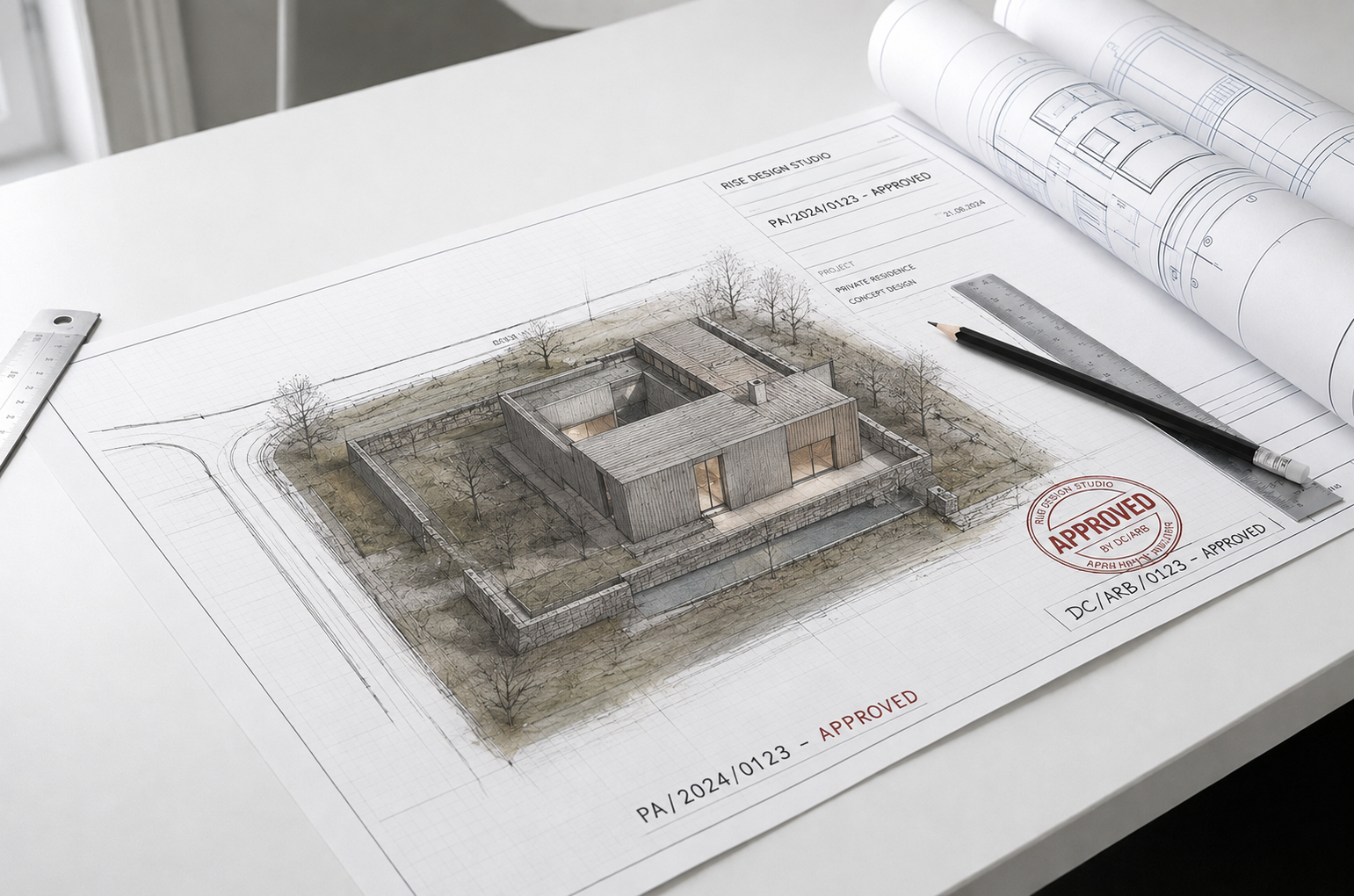
Navigating the New Landscape
At RISE, we believe that great architecture begins long before the first line is drawn. It starts with understanding the site, the policy context, and the planning environment - then building a case that's both compelling and complete.
The new appeals process rewards exactly this approach: thorough preparation, strategic thinking, and submissions that stand up to scrutiny the first time. It's how we've always worked. Now it's how the system works too.
Whether you're planning a contemporary new home, a sensitive extension in a conservation area, or a complex residential development, we understand both the design ambition and the planning reality required to make it happen.
Thinking about a project that needs strategic planning insight? Let's talk about how to position it for success - from pre-application through to approval, or appeal if necessary.
→ Email us at architects@risedesignstudio.co.uk
→ Or call the studio on 020 3947 5886
RISE Design Studio, Architects, Interior Designers + Sustainability Experts
☉ Architecture for people and planet
☉ Trading since 2011
☉ Company reg no: 08129708
☉ VAT no: GB158316403