
Share this
How to Choose a Builder
by Sean Ronnie Hill on Jan 9, 2025
The builder you appoint will have more influence on whether your project succeeds than almost any other decision you make. A well-designed scheme can be undone by poor workmanship, a poorly managed programme, or a contractor who doesn't communicate. We've seen it happen. Here's what we look for when helping clients find the right person for the job.
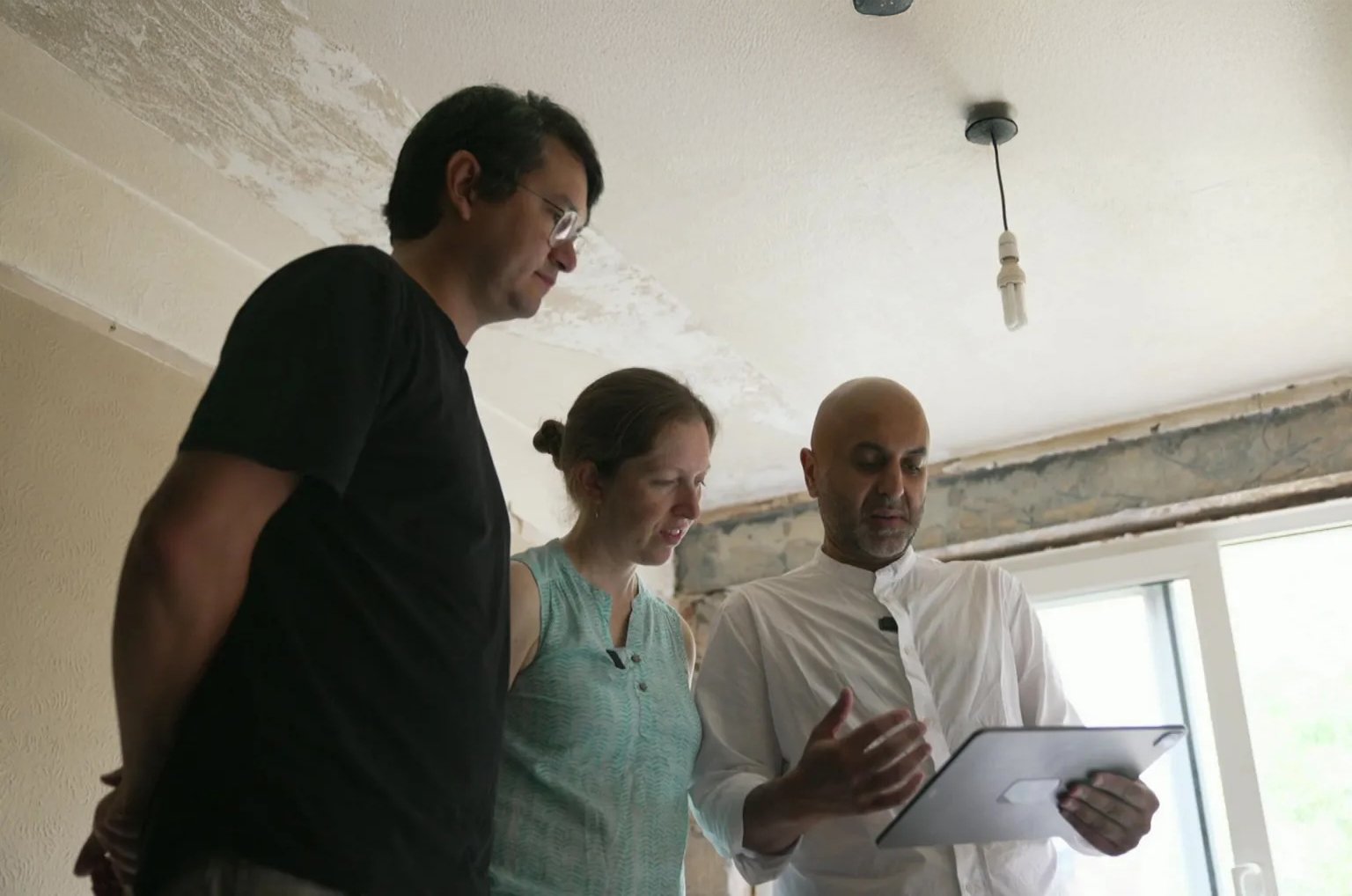
Our Director, Imran Jahn, on the BBC during a site visit with client during construction
Start with the Basics
Before anything else, verify that the builder is a properly constituted business. Are they a registered company? Do they have current public liability insurance, employers' liability insurance, and contractors' all-risk cover? Ask to see the documents rather than taking their word for it. A reputable builder will hand these over without hesitation.
Check their company history. How long have they been trading under their current name? Have they dissolved previous companies? A straightforward Companies House search takes five minutes and can tell you a great deal. You're not being suspicious. You're doing reasonable due diligence on someone you're about to hand a significant sum of money to.
Ask about guarantees. Will they provide a written guarantee on their work, and is it backed by insurance? A builder who is confident in the quality of what they do won't object to this. One who hedges or deflects is worth noting.
Look Beyond the Quote
Getting a quote is the easy part. Understanding what it actually covers is where clients often find themselves in difficulty later.
A proper quote should be detailed, tied to a specific set of drawings and a specification, inclusive of VAT, and clear about what's included and what isn't. Provisional sums, items where the cost hasn't been pinned down, should be identified explicitly rather than buried in a contingency figure. A quote that's suspiciously low often means that items have been excluded or underpriced, and the real cost emerges through variations once the project is underway.
Ask for the quote to be broken down by trade or work package. This makes it possible to compare quotes from different contractors on a like-for-like basis, and it gives your architect something meaningful to review.
Ask about the programme. How long do they expect the work to take? What are the key milestones? Are there any known constraints, material lead times, specialist subcontractor availability, that could affect the timeline? A builder who has thought carefully about the programme before tendering is a different proposition from one who gives you a rough duration and figures they'll work it out as they go.
Who Is Actually on Site?
This is a question more clients should ask and fewer do. The person who comes to meet you and price the job is often not the person who runs the site day to day. The site manager is the person who matters most to the daily reality of your project: they coordinate the trades, they communicate with your architect, they make the hundreds of small decisions that collectively determine whether the build goes well or badly.
Ask who would be managing the site. What's their background? Have they run projects of this type and scale before? Can you meet them before you make your decision? A builder who can't or won't answer these questions clearly is one to be cautious about.
Ask about the subcontractors they use for specialist trades: plumbers, electricians, groundworkers. Do they have established relationships with people they trust, or are they pulling in whoever's available? The quality of the supporting trades is as important as the main contractor's own work.
References and Previous Work
Every builder will tell you their past projects went well. The useful information comes from speaking to the people they worked with.
Ask for references from both previous clients and from the architects who ran those projects. The questions worth asking a previous client are: did the builder show up when they said they would, did the project finish close to the agreed programme, were variations handled transparently, and would they use them again without hesitation? The questions worth asking a previous architect are: did the builder work to the drawings, did they flag problems early or try to paper over them, and did they manage the site professionally?
If possible, visit a completed project. Photos are curated. Standing in a finished room and looking at the quality of the joinery, the junctions between materials, the finish on the plastering, tells you considerably more.
Online reviews are useful as a cross-reference but shouldn't carry too much weight on their own. A builder with fifty four-star reviews may have a very different track record on complex residential projects than on straightforward decorating work.
The Contract
Any builder who is reluctant to work under a formal contract is one to walk away from. The contract is not a sign of distrust. It's the framework that protects both parties if something goes wrong, and on any project of meaningful scale, something always requires a decision that wasn't anticipated at the outset.
We recommend JCT contracts for our residential projects. The JCT Intermediate Contract or the JCT Minor Works Contract, depending on the project's scale and complexity, provides a clear structure for payment, variations, delays, and dispute resolution. The contract should be tied to the drawings and specification, and both parties should understand what they're signing.
Payment terms should be clear. We typically recommend stage payments certified by the architect rather than upfront lump sums or payment structures that front-load money to the contractor before the work is done. Retention, a percentage of each payment held back until practical completion and then released after a defects liability period, is standard practice and reasonable to insist on.
The Architect's Role During Construction
Appointing an architect for contract administration during the build is something we always recommend to our clients, and it's worth explaining why.
The architect's role during construction isn't just to check that the building looks right. It includes reviewing the contractor's programme and progress, inspecting the work at key stages against the drawings and specification, certifying payment applications after verifying that the work they cover has been properly completed, managing variations, and maintaining a contemporaneous record of instructions and decisions.
This sustained professional involvement protects the client in ways that are difficult to replicate without it. A payment certified by an architect carries a level of scrutiny that a client acting alone typically can't provide. Problems caught at inspection stage are dealt with before they're concealed by subsequent work. Variations are documented and priced transparently rather than appearing as surprises in a final account.
At RISE we conduct weekly site visits during active construction phases. We maintain site inspection reports and a running instruction log. We review the contractor's programme and flag concerns about progress early. We're not on site to manage the build on the contractor's behalf; that's their job. We're there to protect the client's interests and make sure that what was designed is what gets built.
A Checklist Worth Using
Before recommending a builder to a client, we run through a consistent set of questions. Here's the version you can use yourself:
Are they a registered company with verifiable trading history? Do they carry current public liability, employers' liability, and contractors' all-risk insurance? Is their quote detailed, VAT-inclusive, and tied to a specific set of drawings? Do they have a clear and realistic programme? Can they tell you who will manage the site and what their background is? Do they work under formal JCT or equivalent contracts? Can they provide references from both clients and architects on comparable projects? Do they have relevant experience in projects of similar type, scale, and construction complexity? Are they willing to work with an architect as contract administrator? Do they provide written guarantees on their work?
If the answer to all of those is yes, you're in a strong position. If there are gaps, it's worth understanding why before you commit.
Taking Your Time
The pressure to appoint quickly, particularly when a project has planning permission and the client is keen to get started, can lead to decisions that create problems for months afterwards. A good builder on a well-run project is considerably less stressful than a poor choice discovered after the contract is signed.
At RISE we run a formal tender process for our projects: a consistent package of drawings and specifications sent to a shortlist of contractors, returned by a deadline, reviewed comparatively, and followed up with clarification meetings before a recommendation is made. That process takes time. It's time well spent.
If you'd like help thinking through the builder selection process for your project, we're glad to talk it through.
→ Email us at architects@risedesignstudio.co.uk
→ Or call the studio on 020 3947 5886
RISE Design Studio, Architects, Interior Designers + Sustainability Experts
☉ Architecture for people and planet
☉ Trading since 2011
☉ Company reg no: 08129708
☉ VAT no: GB158316403

Share this
- Sustainable architecture (165)
- Architecture (150)
- Passivhaus (73)
- Sustainable Design (68)
- Design (67)
- Retrofit (60)
- London (52)
- New build (52)
- Renovation (44)
- energy (39)
- interior design (37)
- Building materials (35)
- Planning (34)
- Environment (31)
- climate-change (30)
- enerphit (29)
- Inspirational architects (27)
- Refurbishment (27)
- extensions (27)
- low energy home (23)
- Building elements (22)
- Inspiration (21)
- London Architecture (16)
- Rise Projects (16)
- Extension (15)
- Innovative Architecture (14)
- Sustainable Architect (14)
- net zero (14)
- Carbon Zero Homes (13)
- Planning permission (13)
- General (12)
- Philosophy (12)
- sustainable materials (12)
- RIBA (11)
- Working with an architect (11)
- Awards (9)
- Residential architecture (9)
- Sustainable (9)
- Sustainable Tennis Pavilion (9)
- architects (9)
- Tennis Pavilion (8)
- architect (8)
- low carbon (8)
- Virtual Reality (7)
- Airtightness (6)
- BIM (6)
- Community Architecture (6)
- Eenergy efficiency (6)
- Overheating (6)
- Passive house (6)
- Uncategorized (6)
- BIMx (5)
- Backland Development (5)
- Basement Extensions (5)
- Carbon Positive Buildings (5)
- Costs (5)
- Low Energy Architecture (5)
- RISE Sketchbook Chronicles (5)
- Sustainable Natural Materials (5)
- cinema design (5)
- construction (5)
- insulation (5)
- local materials (5)
- modular architecture (5)
- natural materials (5)
- sustainable building (5)
- AECB (4)
- ARB (4)
- Feasibility Study (4)
- Home extensions (4)
- House cost (4)
- Mass Timber (4)
- Notting Hill Architects (4)
- Paragraph 84 (4)
- Sustainable Architecture London (4)
- Timber Structures (4)
- concrete (4)
- constructioncosts (4)
- mvhr (4)
- structural (4)
- structuralengineer (4)
- working from home (4)
- Artificial Intelligence (AI) (3)
- Biophilic Design (3)
- Brutalist Architecture (3)
- Building in the Green Belt (3)
- Chartered architect (3)
- Clay Plaster (3)
- Construction Costs (3)
- Embodied Carbon (3)
- Fees (3)
- Heat Pumps (3)
- Home improvement (3)
- Kensal Rise (3)
- Low Energy Homes (3)
- Low-Energy Design (3)
- New Build House (3)
- Paragraph 79 (3)
- Paragraph 80 (3)
- Permitted development (3)
- Property (3)
- Queen's Park Sustainable Architect (3)
- Social housing (3)
- Spain (3)
- Sustainable Architect London (3)
- Sustainable Extensions (3)
- Sustainable Interiors (3)
- Timber Construction (3)
- backland (3)
- building regulations (3)
- circular economy (3)
- country house (3)
- countryside (3)
- furniture (3)
- house extension (3)
- listed buildings (3)
- plywood (3)
- rammed earth (3)
- rear extension (3)
- self build (3)
- stoke newington (3)
- sustainability (3)
- sustainable structure (3)
- victorian terrace (3)
- zero waste (3)
- 3D models (2)
- AECB CarbonLite (2)
- Architects in Spain (2)
- BREEAM (2)
- Bespoke lighting (2)
- Bricks (2)
- Building energy (2)
- CLT (2)
- Chartered Practice (2)
- Commercial Architecture (2)
- Contractor (2)
- Covid-19 (2)
- Designing with Stone (2)
- Ecohouse (2)
- EnerPHit London (2)
- Furniture design (2)
- Garden studio (2)
- Hackney (2)
- Hampstead Architects (2)
- Heritage (2)
- Japanese Archiecture (2)
- Loft conversion (2)
- London Architect (2)
- Low Carbon Future (2)
- Mews House Retrofit (2)
- Modern Methods of Construction (2)
- North London Architects (2)
- Paragraph 84 home (2)
- Passivhaus London (2)
- Period Homes (2)
- Permitted development rights (2)
- Recycling (2)
- Regenerative Architecture (2)
- Residential Architects London (2)
- Roof extension (2)
- Rural New Build (2)
- Social Distancing (2)
- Sports Architecture (2)
- Store Design (2)
- Sustainable Affordable Homes (2)
- Sustainable Architect Fees (2)
- Sutton Churches Tennis Club (2)
- Tennis Club Architecture (2)
- Welbeing (2)
- West London Architect (2)
- Whole Life Carbon (2)
- Winter Performance (2)
- ashp (2)
- barcelona (2)
- building information modelling (2)
- circular rooflight (2)
- co-working (2)
- countryside architecture (2)
- design&build (2)
- epc (2)
- glazed-extensions (2)
- green architecture (2)
- greenbelt (2)
- hampstead (2)
- health and wellbeing (2)
- historic architecture (2)
- home extension (2)
- interiorfinishes (2)
- light (2)
- living space (2)
- london landmarks (2)
- londoncinemas (2)
- low-carbon design (2)
- openingupworks (2)
- peter zumthor (2)
- project management (2)
- renewable energy (2)
- rural architecture UK (2)
- traditional (2)
- trialpits (2)
- waste (2)
- wooden furniture (2)
- #NLANetZero (1)
- 3D Printing (1)
- 3D Walkthroughs (1)
- AI and Architecture (1)
- Adam Weismann (1)
- Adobe (1)
- Agriculture and Architecture (1)
- Alvar (1)
- Appointing an Architect (1)
- Architect Barcelona (1)
- Architects Fees UK (1)
- Architectural Research (1)
- Architecture Interior Design (1)
- Architecture London (1)
- Architecture and nature (1)
- Architraves (1)
- Area (1)
- Art (1)
- Art and Architecture (1)
- Atmospheric Design (1)
- Audio Visual (1)
- Balconies (1)
- Biodiversity (1)
- Biomimicry (1)
- Biophilic Architecture (1)
- Birmingham Selfridges (1)
- Boat building (1)
- Boats (1)
- Brass (1)
- Brent Planning (1)
- Brexit (1)
- Brownfield Development (1)
- Building Insulation (1)
- Building performance (1)
- Buildings Insurance (1)
- CLT and glulam (1)
- Café Design (1)
- Calm Interiors (1)
- Cantilevered Roof (1)
- Carpentry (1)
- Casting (1)
- Chailey Brick (1)
- Claymoon Studio (1)
- Cold Water Swimming (1)
- Concrete Architecture (1)
- Conservation Area Architects (1)
- Contemporary Architecture (1)
- Contemporary Architecture Hampstead (1)
- Copper (1)
- Cornices (1)
- Corten (1)
- Cowboy Builders (1)
- Czech Republic, (1)
- Data Centers (1)
- David Hockney (1)
- David Lea (1)
- Digital Twin (1)
- Domus Nova (1)
- Dormer extension (1)
- EPC Rating (1)
- Elmwood Lawn Tennis Club (1)
- Employer's Liability (1)
- EnerPHit Retrofit (1)
- Energy Performance (1)
- EnvironmentalArchitecture (1)
- Fabric First (1)
- Fabric First Design (1)
- Flooding (1)
- Future of Housing (1)
- Gandhi memorial museum (1)
- Georgian Extension (1)
- Green Mortgage (1)
- Green Register (1)
- Green infrastructure (1)
- GreenDesign (1)
- Herbert Paradise (1)
- Heritage Retrofit (1)
- History (1)
- Home Renovation (1)
- Home Retrofit (1)
- Homeowner Guide (1)
- House Extension Architect (1)
- Hyde Park (1)
- India (1)
- Insurance (1)
- Interior Architecture London (1)
- Interior Finishes (1)
- Jan Kaplický (1)
- Japandi (1)
- Joinery (1)
- Kensal Rise Architects (1)
- Kitchen Design (1)
- L-shaped dormer (1)
- Land value (1)
- Leonardo Da Vinci (1)
- Lime render (1)
- Listed Building Architects (1)
- London Architects (1)
- Lord's Media Centre (1)
- Low Carbon Home (1)
- Low-Carbon Architecture (1)
- Low-Energy Buildings (1)
- Mapping (1)
- Marseilles (1)
- Mary Portas (1)
- Material Culture (1)
- Matiz Gallery (1)
- Metal (1)
- Micro Generation (1)
- Mid Century Retrofit (1)
- Modern House Extension (1)
- Monuments (1)
- Mouldings (1)
- Museum Architecture (1)
- Mycelium Architecture (1)
- NPPF (1)
- Natural Light Architecture (1)
- Nature (1)
- Nature-Led Design (1)
- Net Zero Architecture (1)
- New Build Architects (1)
- North London (1)
- North West London (1)
- Office to Homes (1)
- Office to Hotel Conversion (1)
- Offsite manufacturing (1)
- Open water swimming (1)
- Origami (1)
- Padel Court (1)
- Party Wall Surveyor (1)
- Passivhaus Architects London (1)
- Passivhaus Design (1)
- Pavilion Architecture (1)
- PeopleFirstDesign (1)
- Place (1)
- Podcast (1)
- Porch (1)
- Prefab (1)
- Pro bono (1)
- Procurement (1)
- Professional Indemnity (1)
- Public Housing (1)
- Queen's Park (1)
- RBKC architects (1)
- RISE Insight (1)
- RISE Team (1)
- Rebuild (1)
- Reclaimed Brick Architecture (1)
- Renovation Advice (1)
- Replacement Dwelling (1)
- ResilientFuture (1)
- Richard Rogers (1)
- Sand (1)
- Scallop House (1)
- Scandinavian architecture (1)
- Selfbuild (1)
- Serpentine Lake (1)
- Skirting (1)
- Slow Architecture (1)
- Small Sites Development (1)
- Solar Shading (1)
- Sports Pavilion Design (1)
- Steel (1)
- Stone Architecture (1)
- Surveying (1)
- Sustainable Basement Extension (1)
- Sustainable Building Systems (1)
- Sustainable Housing (1)
- Sustainable Lighting (1)
- Sustainable Mews House (1)
- Sustainable Padel Court (1)
- Sustainable Retail Store (1)
- Sustainable Retrofit (1)
- Sverre fehn (1)
- Thermal comfort (1)
- UFH (1)
- Unfired Clay (1)
- VR (1)
- Vernacular Construction (1)
- Victorian Extension (1)
- Walkable Cities (1)
- Wellbeing and design (1)
- West london (1)
- Wildlife (1)
- Winston Road N16 (1)
- Wood (1)
- accessible design (1)
- architect Kensington Chelsea (1)
- architect fees (1)
- architectural details (1)
- arne jacobsen (1)
- avant garde (1)
- basements (1)
- biophilic design London (1)
- brentdesignawards (1)
- building design (1)
- built environment (1)
- carbon sink (1)
- carbonpositive (1)
- cement (1)
- charles correa (1)
- charles eames (1)
- charlie warde (1)
- charteredarchitect (1)
- climate (1)
- climate action (1)
- codes of practice (1)
- collaboration (1)
- contract works insurance (1)
- covid (1)
- curved architecture (1)
- daylighting (1)
- dezeenawards (1)
- drone (1)
- eco home design (1)
- eco-living (1)
- emissions (1)
- finnish architecture (1)
- foundations (1)
- futuristic (1)
- georgian architecture (1)
- glazed envelope (1)
- good working relationships (1)
- green building (1)
- happiness (1)
- homesurveys (1)
- imperfection (1)
- independentcinemas (1)
- innovation (1)
- inspirational (1)
- internal windows (1)
- jean prouve (1)
- kindness economy (1)
- kintsugi (1)
- kitchen extension Notting Hill (1)
- landscape architecture (1)
- lime (1)
- local (1)
- lockdown (1)
- mansard (1)
- manufacturing (1)
- materiality (1)
- modern architecture (1)
- moderninst (1)
- modernism (1)
- modular architect London (1)
- moulded furniture (1)
- natural (1)
- natural cooling (1)
- natural light (1)
- natural materials architecture (1)
- new build architect Sussex (1)
- nordic pavilion (1)
- northern ireland (1)
- palazzo (1)
- placemaking (1)
- planningpermission (1)
- plywood kitchen (1)
- post-Covid (1)
- poverty (1)
- powerhouse (1)
- preapp (1)
- preapplication (1)
- property owners liability (1)
- ray eames (1)
- reclaimed bricks (1)
- recycle (1)
- reuse (1)
- ricardo bofill (1)
- risedesignstudio (1)
- rooflights (1)
- room reconfiguration (1)
- rural (1)
- satellite imagery (1)
- selfbuildhouse (1)
- shared spaces (1)
- site-progress (1)
- solarpvs (1)
- space (1)
- stone (1)
- structuralsurvey (1)
- sun tunnel (1)
- sustainable home design (1)
- tennis clubhouse design (1)
- terraces (1)
- thegreenregister (1)
- timber architecture (1)
- totality (1)
- wabi-sabi (1)
- June 2026 (1)
- May 2026 (5)
- April 2026 (2)
- March 2026 (8)
- February 2026 (5)
- January 2026 (4)
- December 2025 (10)
- November 2025 (14)
- October 2025 (9)
- September 2025 (10)
- August 2025 (13)
- July 2025 (23)
- June 2025 (10)
- May 2025 (22)
- April 2025 (16)
- March 2025 (8)
- February 2025 (12)
- January 2025 (6)
- December 2024 (6)
- November 2024 (8)
- October 2024 (5)
- September 2024 (3)
- August 2024 (2)
- July 2024 (2)
- June 2024 (2)
- May 2024 (1)
- April 2024 (1)
- March 2024 (1)
- February 2024 (1)
- January 2024 (3)
- November 2023 (1)
- October 2023 (5)
- September 2023 (7)
- August 2023 (7)
- July 2023 (6)
- June 2023 (8)
- May 2023 (14)
- April 2023 (11)
- March 2023 (8)
- February 2023 (6)
- January 2023 (5)
- December 2022 (3)
- November 2022 (3)
- October 2022 (3)
- September 2022 (3)
- July 2022 (2)
- June 2022 (1)
- May 2022 (1)
- April 2022 (1)
- March 2022 (1)
- February 2022 (2)
- January 2022 (1)
- November 2021 (1)
- October 2021 (2)
- July 2021 (1)
- June 2021 (1)
- May 2021 (1)
- April 2021 (1)
- March 2021 (1)
- February 2021 (1)
- January 2021 (2)
- December 2020 (1)
- November 2020 (1)
- October 2020 (1)
- September 2020 (2)
- August 2020 (1)
- June 2020 (3)
- April 2020 (3)
- March 2020 (2)
- February 2020 (3)
- January 2020 (1)
- December 2019 (1)
- November 2019 (2)
- September 2019 (1)
- June 2019 (1)
- April 2019 (2)
- January 2019 (2)
- October 2018 (1)
- September 2018 (1)
- August 2018 (2)
- July 2018 (1)
- March 2018 (1)
- February 2018 (2)
- December 2017 (1)
- September 2017 (1)
- May 2017 (1)
- January 2017 (1)
- December 2016 (1)
- November 2016 (1)
- September 2016 (1)
- August 2016 (2)
- June 2016 (2)
- May 2016 (1)
- April 2016 (1)
- December 2015 (1)
- October 2015 (1)
- September 2015 (1)
- August 2015 (1)
- June 2015 (1)
- January 2015 (1)
- September 2014 (2)
- August 2014 (1)
- July 2014 (4)
- June 2014 (9)
- May 2014 (2)
- April 2014 (1)
- March 2014 (1)
- February 2014 (1)
- December 2013 (1)
- November 2013 (5)
- October 2013 (5)
- September 2013 (5)
- August 2013 (5)
- July 2013 (5)
- June 2013 (2)
- May 2013 (2)
- April 2013 (4)
- March 2013 (5)
- February 2013 (2)
- January 2013 (3)