
Share this
by Sean Ronnie Hill on Apr 2, 2025
Poblenou is changing, and mostly for the better. The old factories and print works of Barcelona's industrial district now hold coffee roasters, ceramicists, furniture makers and a run of small independent shops along Carrer de Maria Aguiló, a street that has held onto its ground-floor trades where much of the city has lost them. Behind number 83, in a former workshop unit with a dusty shopfront, RISE Design Studio spent the spring of 2025 helping to build a home for INDOI, the slow fashion label founded by Mallika Chaudhuri. This is the story of that fit-out: what we found, what we kept, and why we did as little as possible to it.
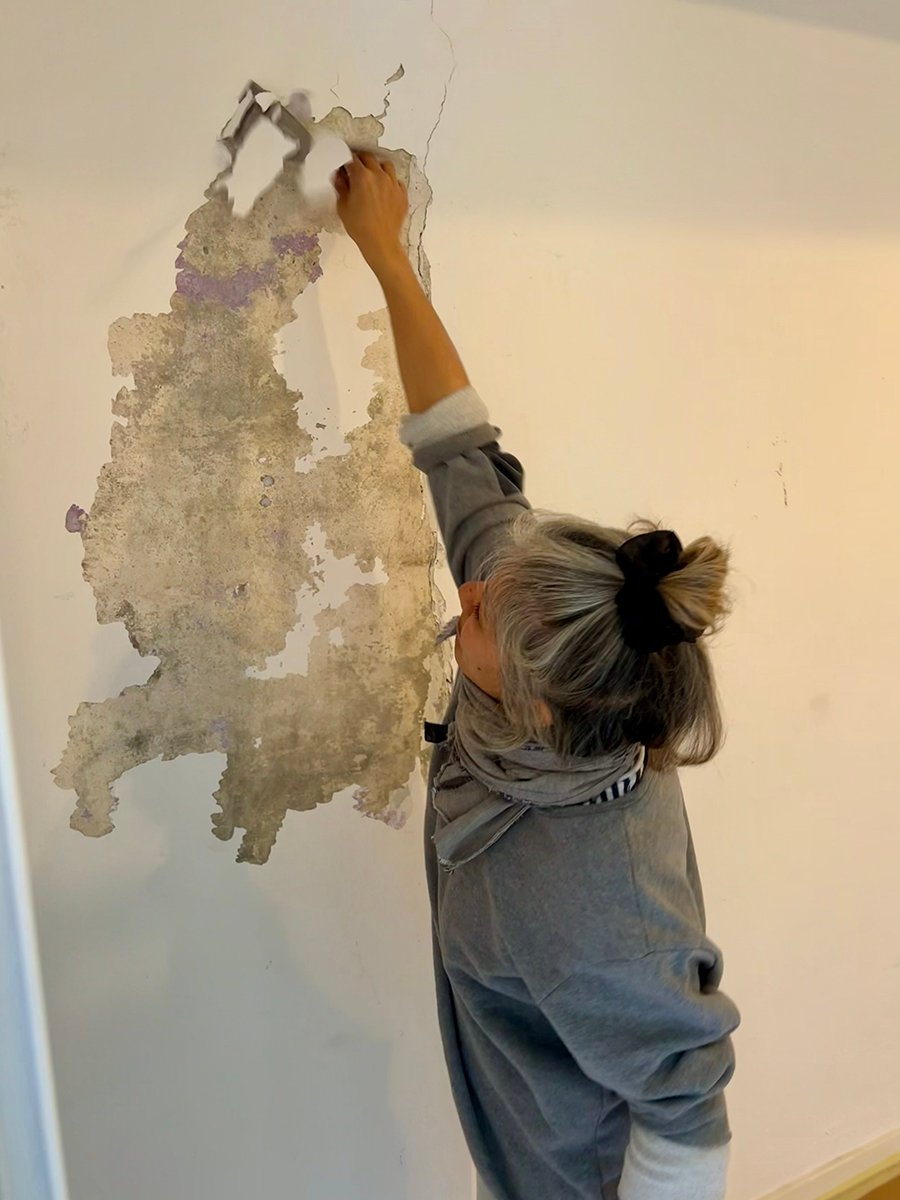
Mallika, founder of Indoi, peeling back the layers: uncovering the original wall textures during the renovation of INDOI ghar, revealing the quiet history of the space.
A home, not a store
Mallika did not ask for a shop. She asked for a "ghar", the Hindi and Urdu word for home, a place where INDOI's clothing could sit alongside the people who make it, the people who buy it and the conversations between them. Craft, culture and community were the three words in the brief, and the point of the space was that customers should understand where an object came from before they took it away.
That changes what a retail interior has to do. A conventional shop fit-out is built for throughput: bright, flat, quick to install and quick to strip out at the end of the lease. INDOI Ghar needed the opposite. It needed somewhere people would slow down, sit, drink tea and ask questions. So rather than design a retail interior in the usual sense, we set out to uncover the one the building already had.
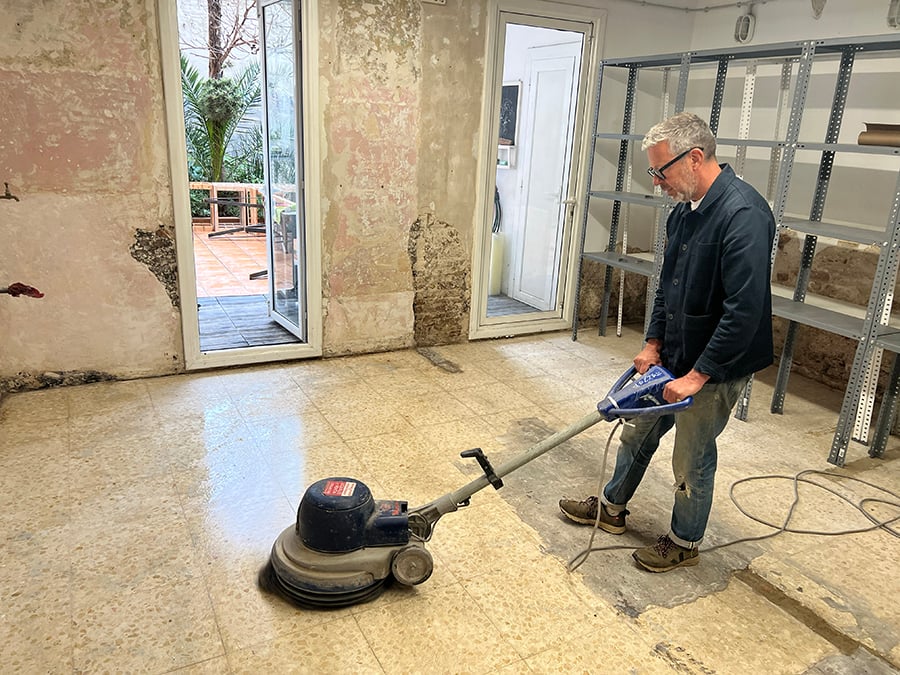
Bringing the floor back to life: gently polishing the original terrazzo tiles to reveal their soft sheen and natural warmth - a quiet centrepiece of INDOI ghar.
Reveal, don't replace
The unit is a ground-floor "bajos" in a nineteenth-century Poblenou block, and like most of them it had been altered many times over its life. Our first job was taking those alterations off layer by layer, slowly, to see what was underneath.
Under the vinyl floor tiles was the original terrazzo, untouched for decades and in good enough condition to clean and keep. The timber doors had been painted so many times the profiles had softened; stripped back, the grain was still there. The masonry walls, once the later linings came off, had cracks, uneven patches and generations of handmade repairs, and we kept every one of them. Filling, skimming and painting over that history would have been faster. It would also have thrown away the most interesting thing in the room.
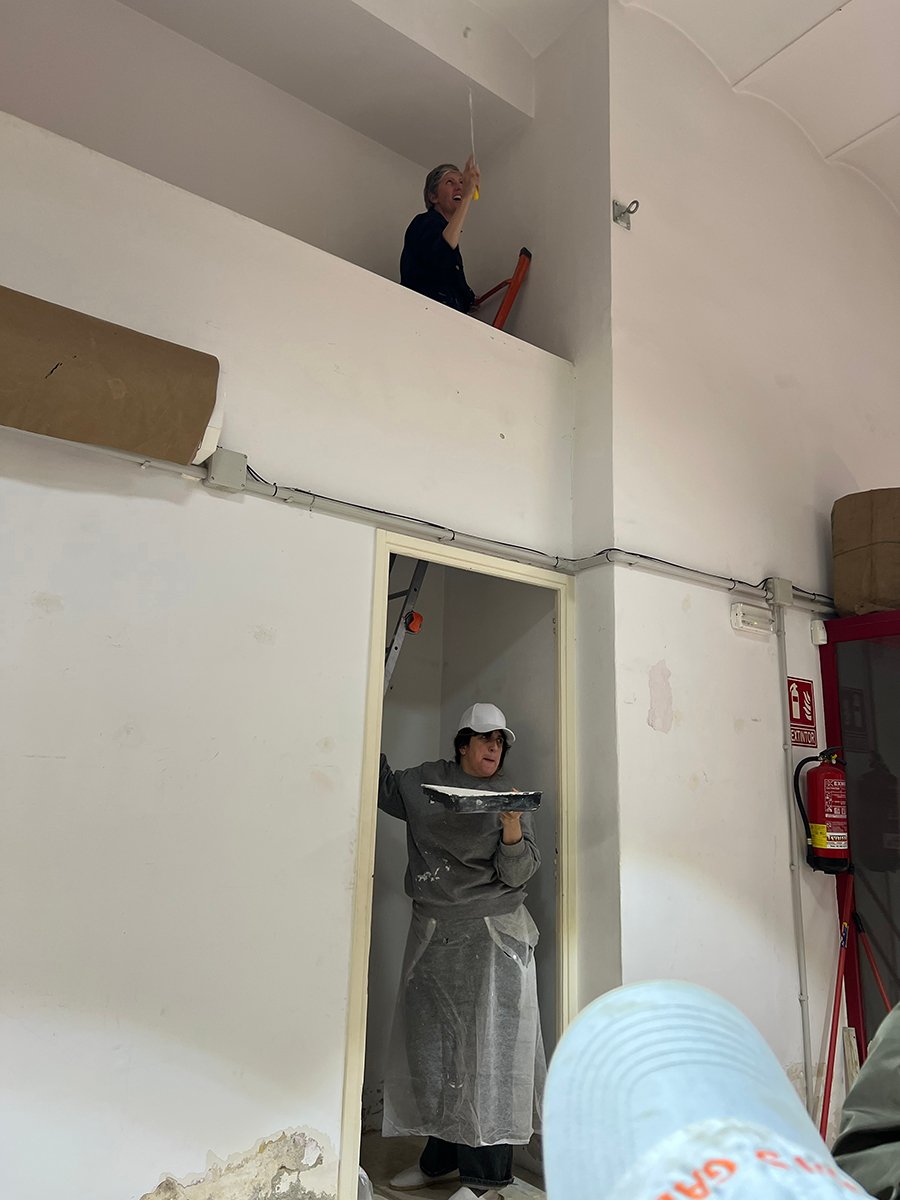
Building together: painting, prepping, and transforming the space as a team - the renovation of INDOI ghar was as much about community as it was about design
This is the same instinct that runs through our retrofit work in London. The lowest-carbon material is almost always the one already in the building, because its embodied carbon has been spent. A terrazzo floor from the 1900s is a working floor. It does not need replacing to be a good one.
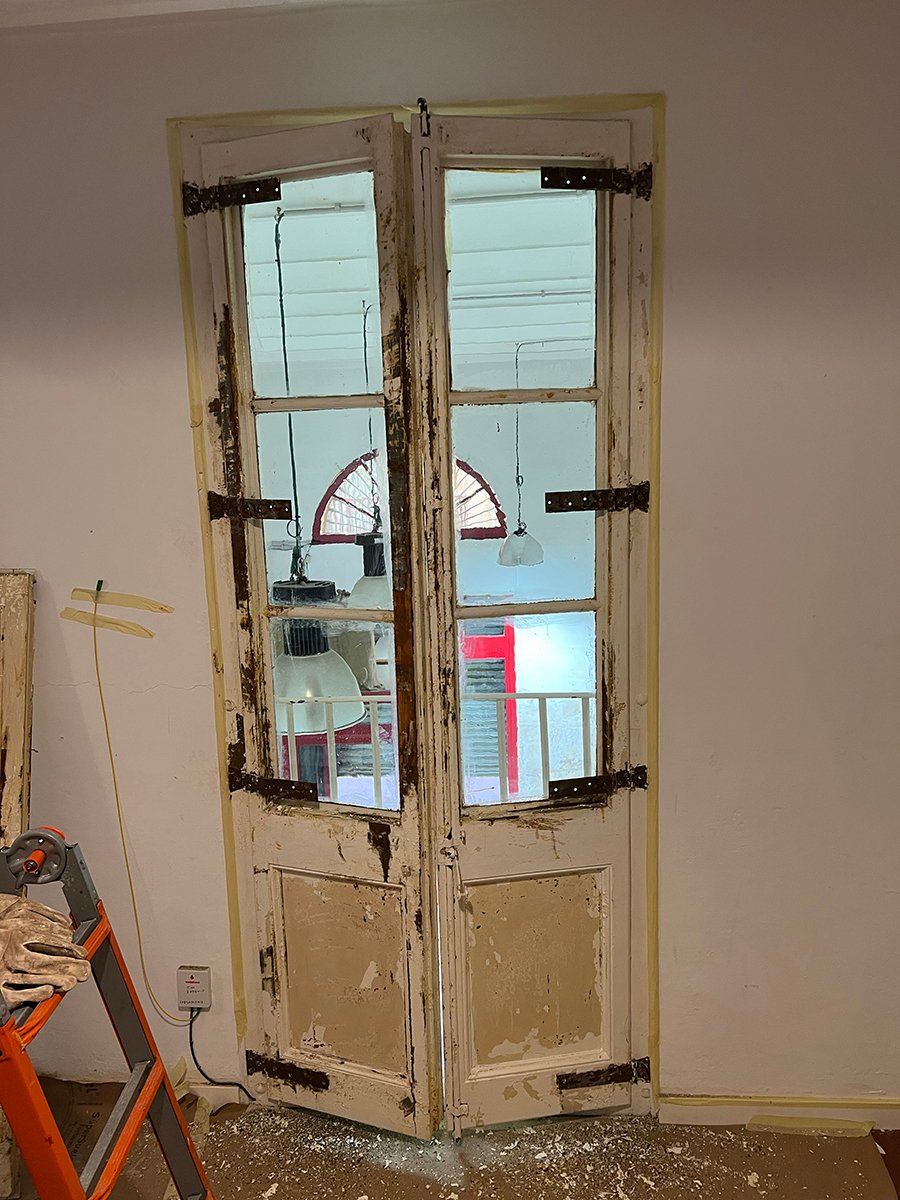
Stripping back layers of paint and varnish to reveal the original timber doors - a careful process of restoration at the heart of INDOI ghar’s design approach
Materials with a history
Where something new was needed, it was mostly old. The walls were finished in Bauwerk limewash, a natural lime paint that lets the masonry breathe and takes pigment softly rather than sitting on the surface like a film of acrylic. Shelving and rails are reclaimed pine. The lighting was bought second-hand. Almost nothing was manufactured specifically for the shop, which for a label built on natural fibres, small runs and reuse was the only honest way to build it.
There was one other decision that shaped the space more than any material. There was no line between designer and builder. RISE Design Studio worked on site alongside Mallika and her family, sanding doors, lifting tiles, painting walls and rewiring, through early mornings and a great many tea breaks. That is not how most architects deliver a fit-out, and it is not how we deliver most projects, but for a space this small and this personal it was the right approach. Every surface in the finished shop was touched by someone who now works in it.
The trade is time for money. A slow fit-out like this costs a fraction of a plasterboard-and-spotlights refit, but it takes weeks rather than days, and it needs a client willing to live with a building site. For an independent business opening its first shop, that is often exactly the right trade.
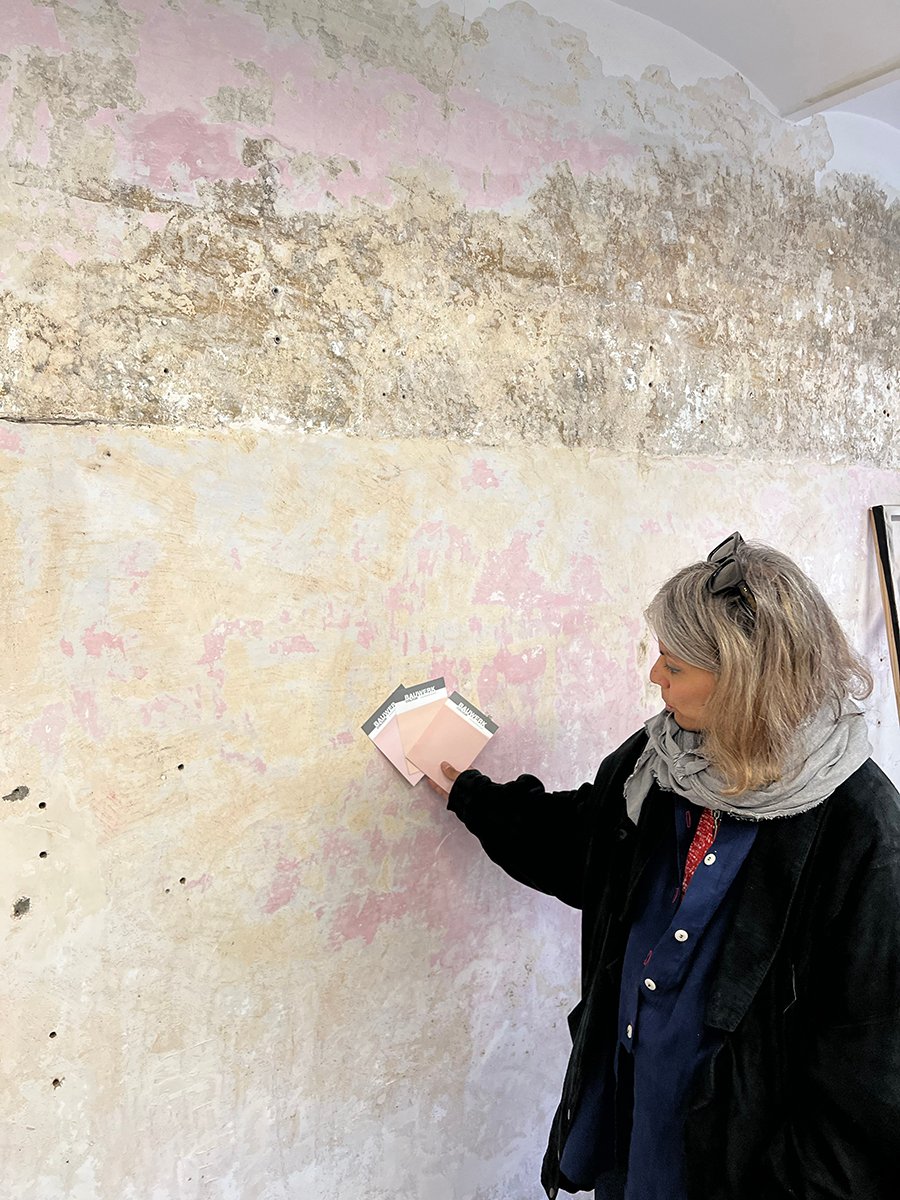
Colour in context: selecting natural limewash tones in response to the textures and traces revealed on the original walls of INDOI ghar.
How the space is laid out
The plan follows the brief's three words.
The front of the shop is retail: INDOI's full collection of garments in organic and regenerative cotton, silk and upcycled antique textiles, alongside a small edit of homeware, incense and textiles from makers Mallika knows personally. Daylight from the shopfront reaches the whole room, and the terrazzo carries it back.
Beneath the mezzanine is the workshop, sized for a dozen people around a table. It was designed for visible mending circles, natural dyeing classes, pattern-cutting sessions and the kind of conversations about slow fashion that are hard to have across a counter. Upstairs on the mezzanine is INDOI's own design studio and a quiet tea room, a place for staff to work and for customers to stay a while after they have bought something, or without buying anything at all.
The whole thing fits into a single ground-floor unit, which is a useful reminder that a shop, a workshop, a studio and a place to sit do not need four separate addresses. They need a plan that gives each one its own light and its own corner.
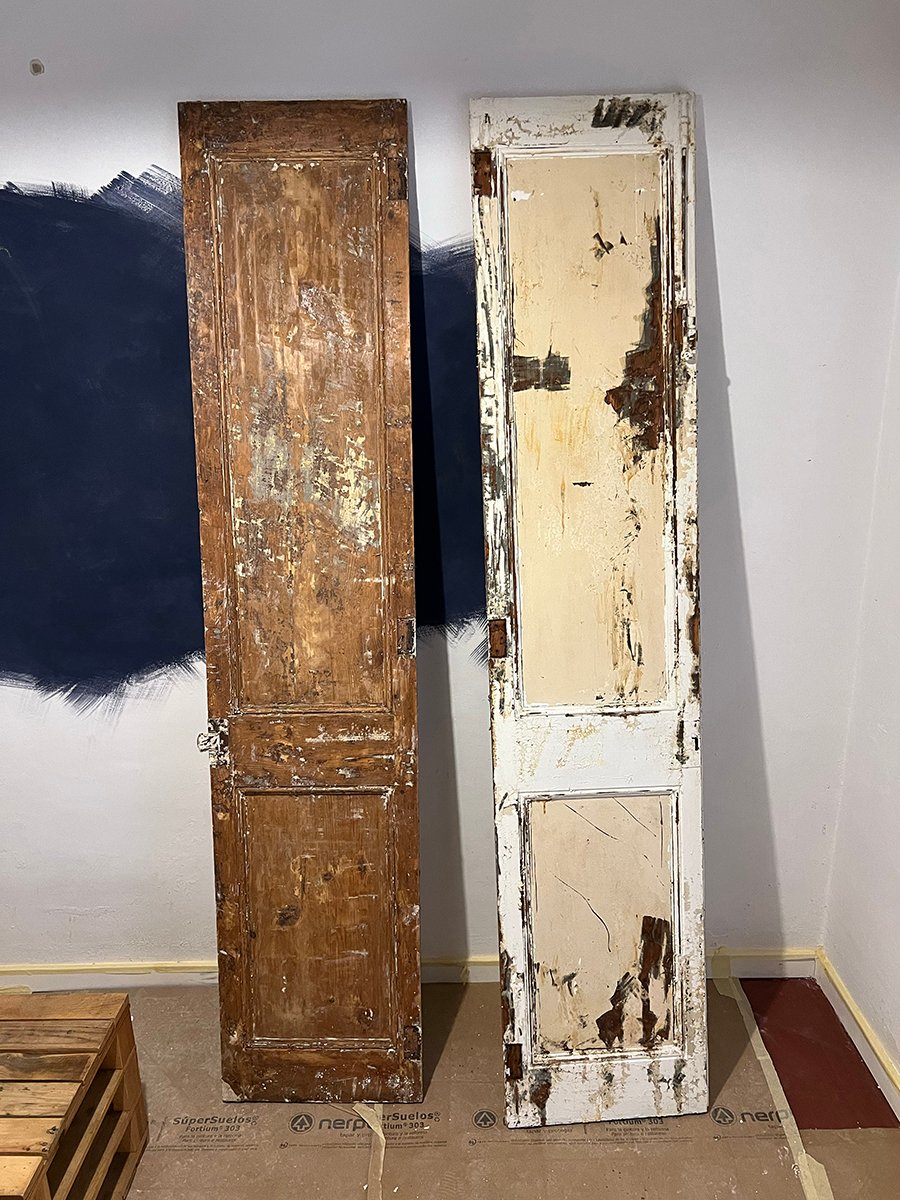
Two doors, two stories: one in the midst of being stripped, the other nearly restored — revealing the layered beauty hidden beneath decades of paint at INDOI ghar
What a slow shop feels like
INDOI Ghar has no illuminated sign and no glossy displays. It is matte, warm and slightly uneven, and it photographs like the clothes: clearly made by hand, clearly made by someone. That is the retail equivalent of the fabric-first approach we take to housing. Get the material and the daylight right, and the space needs very little else to work.
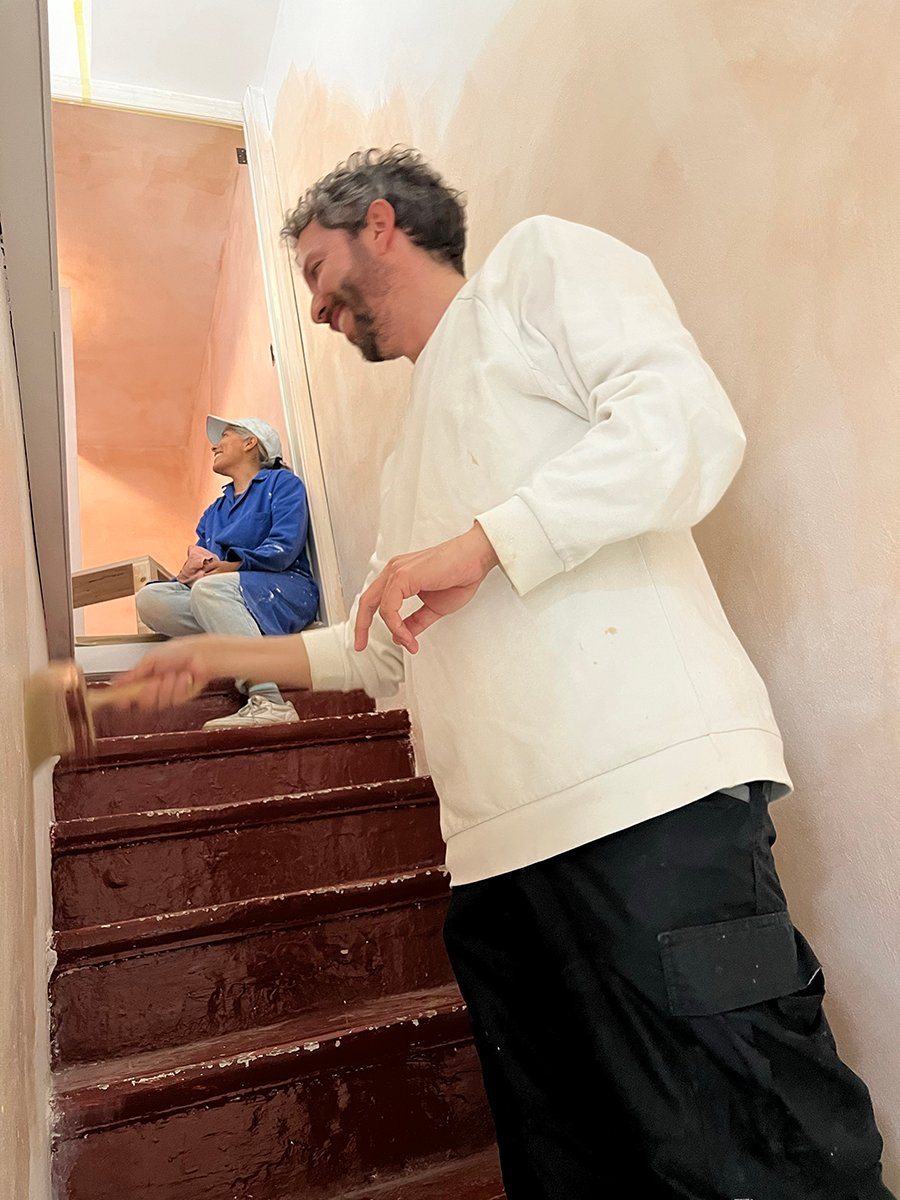
Painting with purpose - and a few laughs along the way. Every part of INDOI ghar, even the stairwell, was shaped by collaboration and care
We have written before about retail and the Kindness Economy, Mary Portas's argument that a shop should give something back to the street it sits on. Keeping an old floor and an old pair of doors on Maria Aguiló is a small version of that. So is a room where people are welcome to come in for tea.
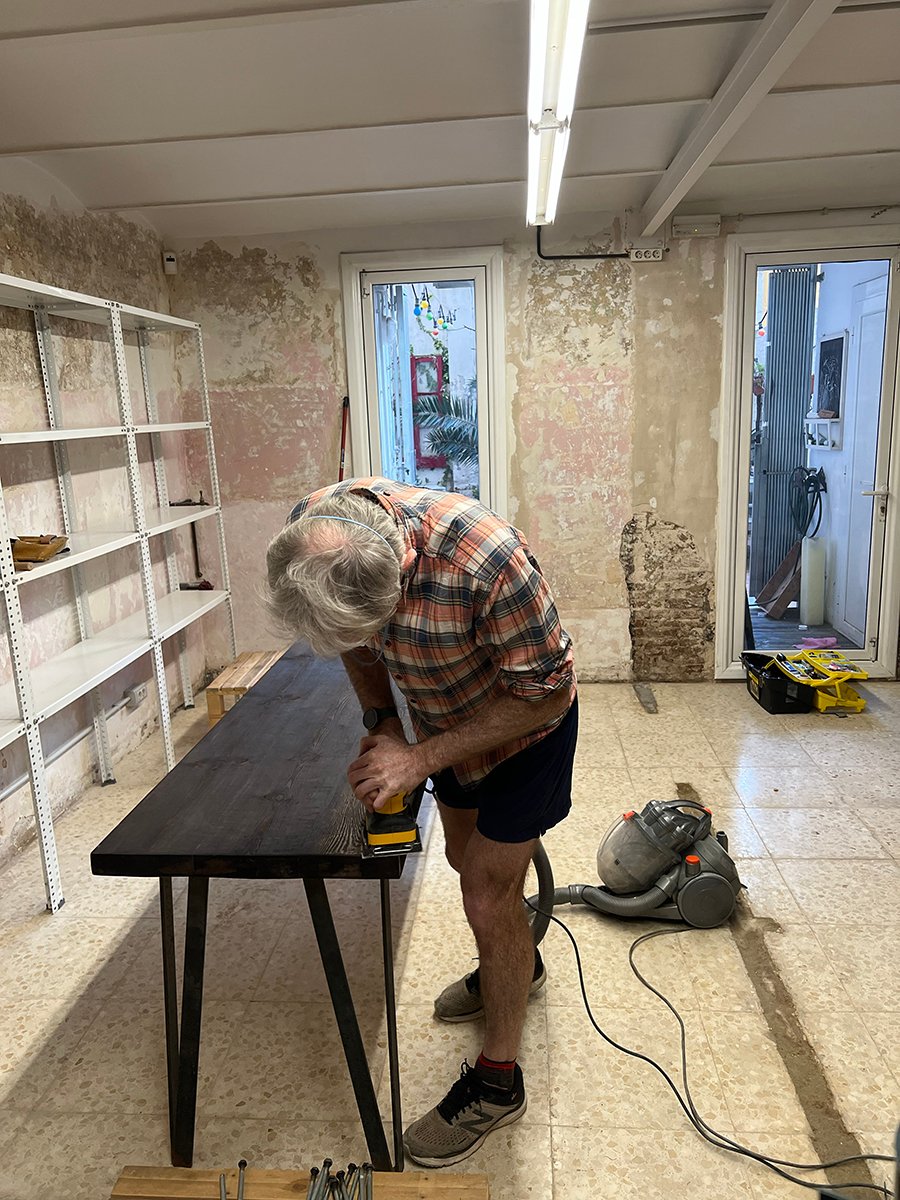
Crafting the details: sanding a handmade table destined for the heart of INDOI ghar - where every piece has a purpose and every finish tells a story
INDOI Ghar today
The doors opened in May 2025 and the shop has been trading since. If you are in Poblenou, it is a few minutes' walk from Poblenou metro and the Rambla del Poblenou, and you are welcome to step inside, touch the fabrics, ask where something was made and stay for a cup of tea. Opening hours, workshop dates and the full collection are at indoi.world. There is more on the clothes themselves, and on why a label making sustainable clothes in Barcelona and a practice making low-energy buildings turned out to be working on the same problem, in our follow-up post.
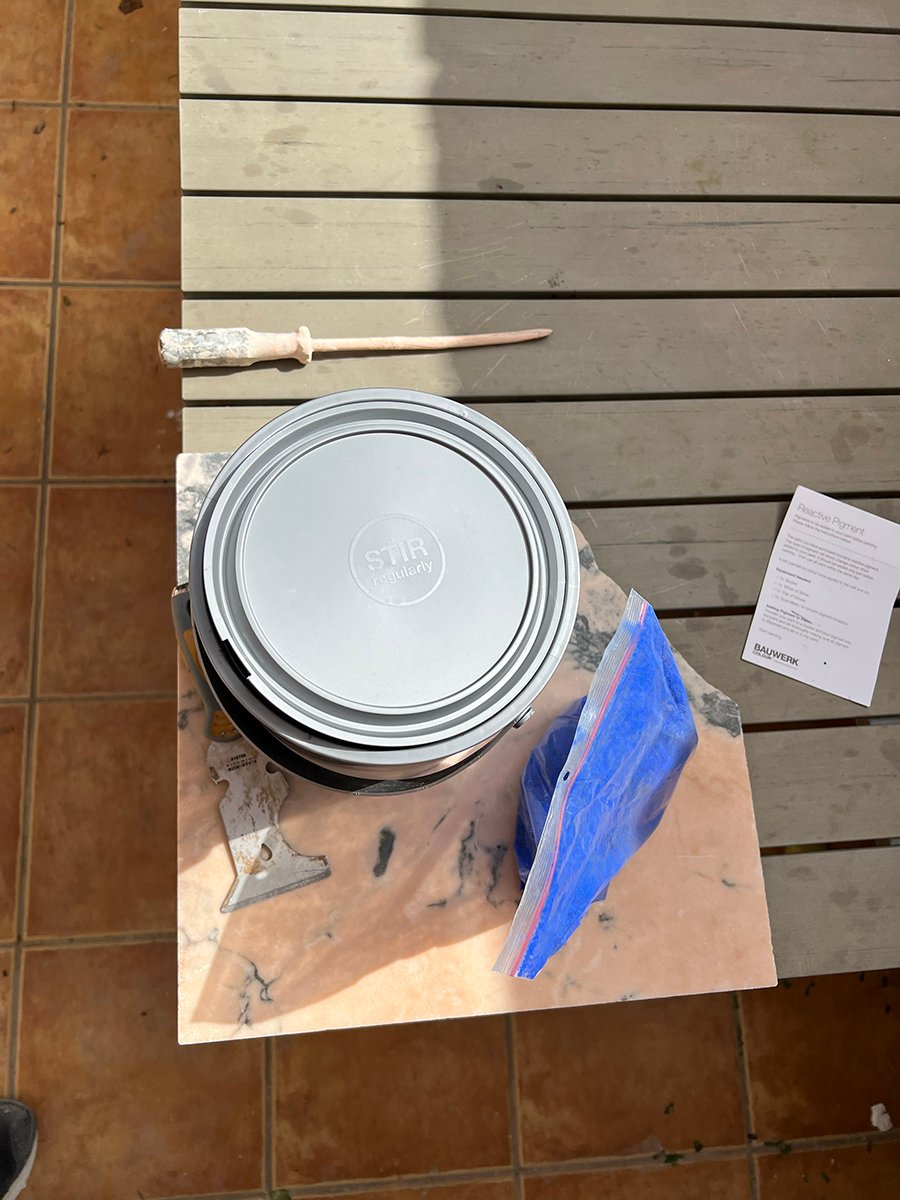
Tools of intention: Bauwerk limewash paint and natural pigments ready for application - chosen for their breathability, beauty, and alignment with INDOI ghar’s sustainable ethos
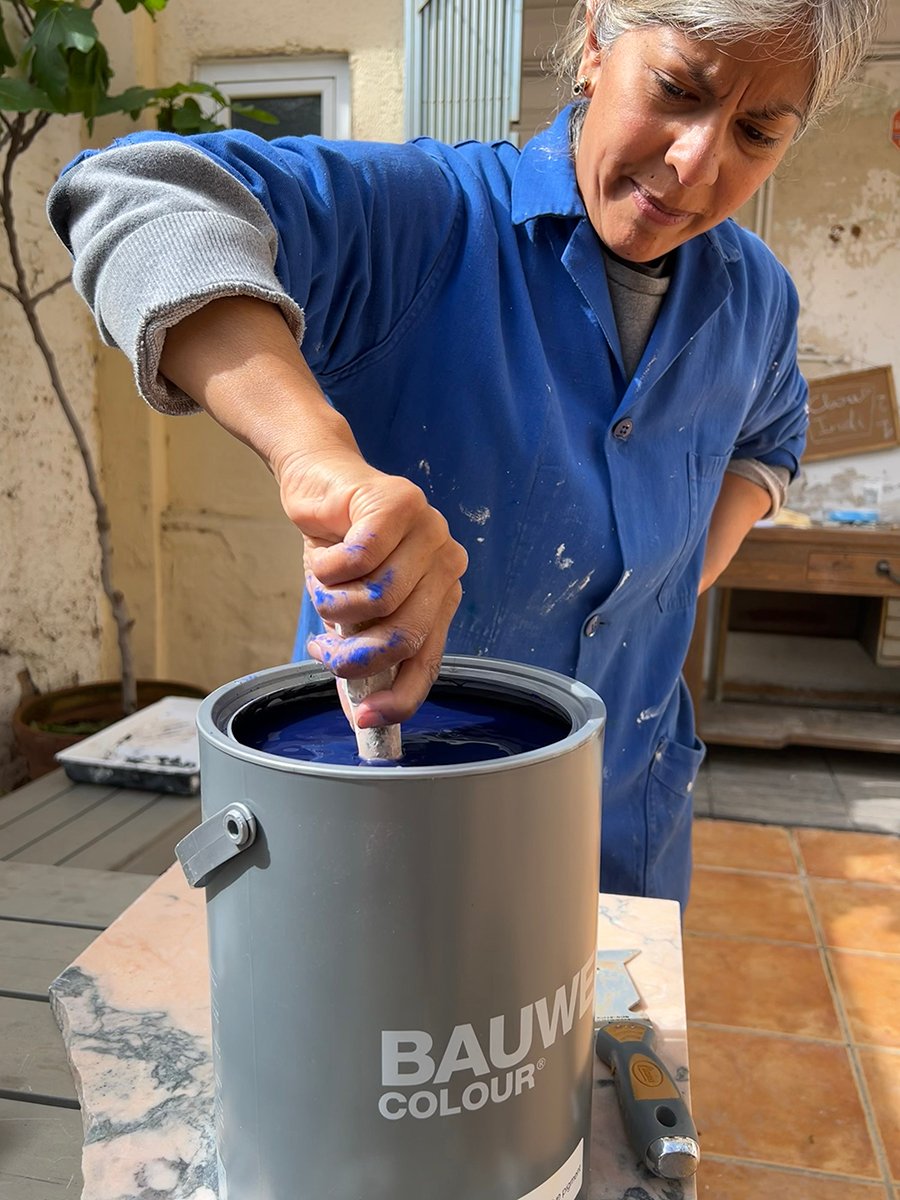
Stirred by hand: mixing Bauwerk’s natural limewash paint - a sustainable choice that brings depth, softness, and breathability to the walls of INDOI ghar
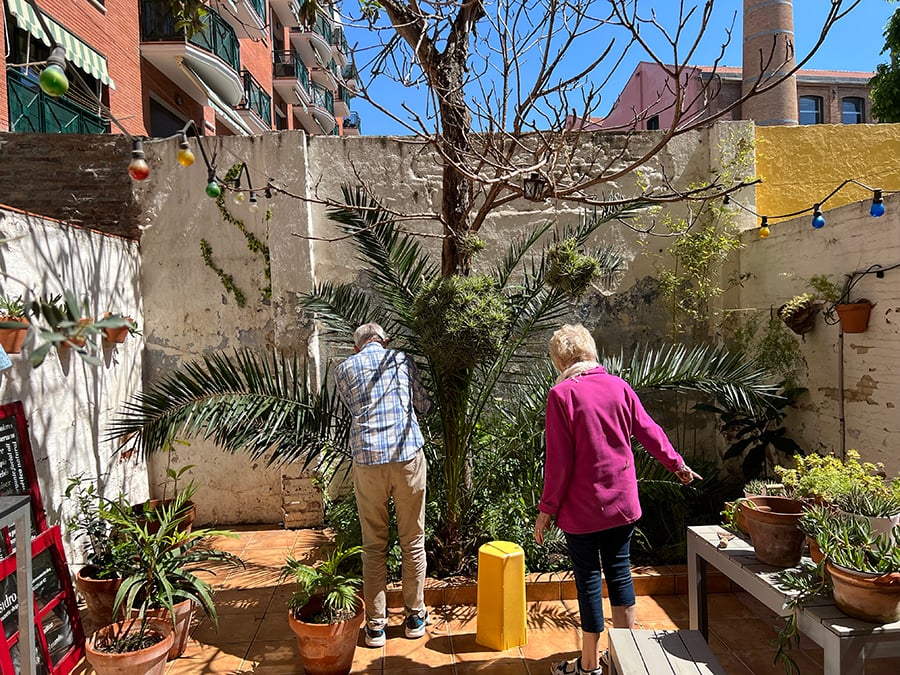
Family roots: with helping hands from the in-laws, the courtyard garden at INDOI ghar began to take shape - a space nurtured with as much care as the interior
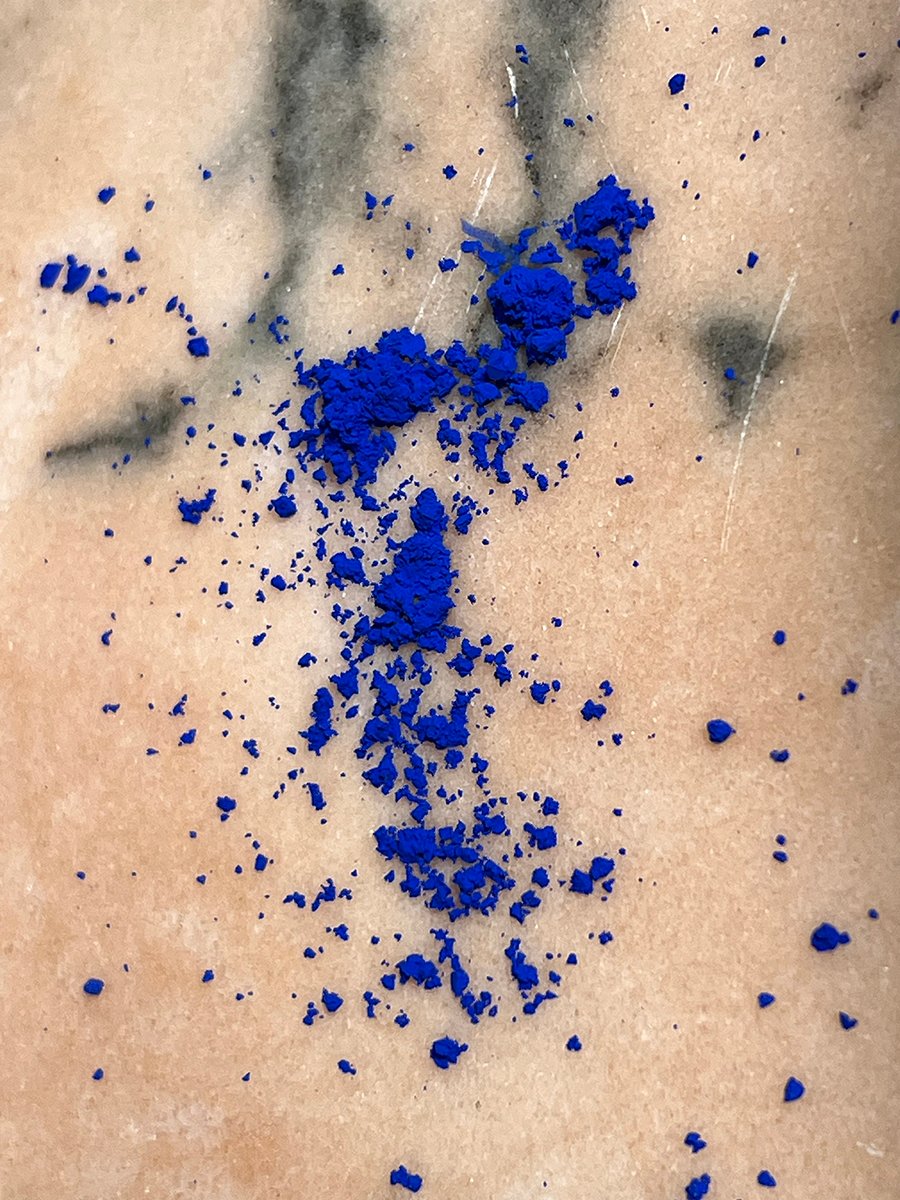
The magic ingredient: Bauwerk’s vibrant blue pigment - once mixed into the limewash, it must be applied within 24 hours, capturing colour at its most alive
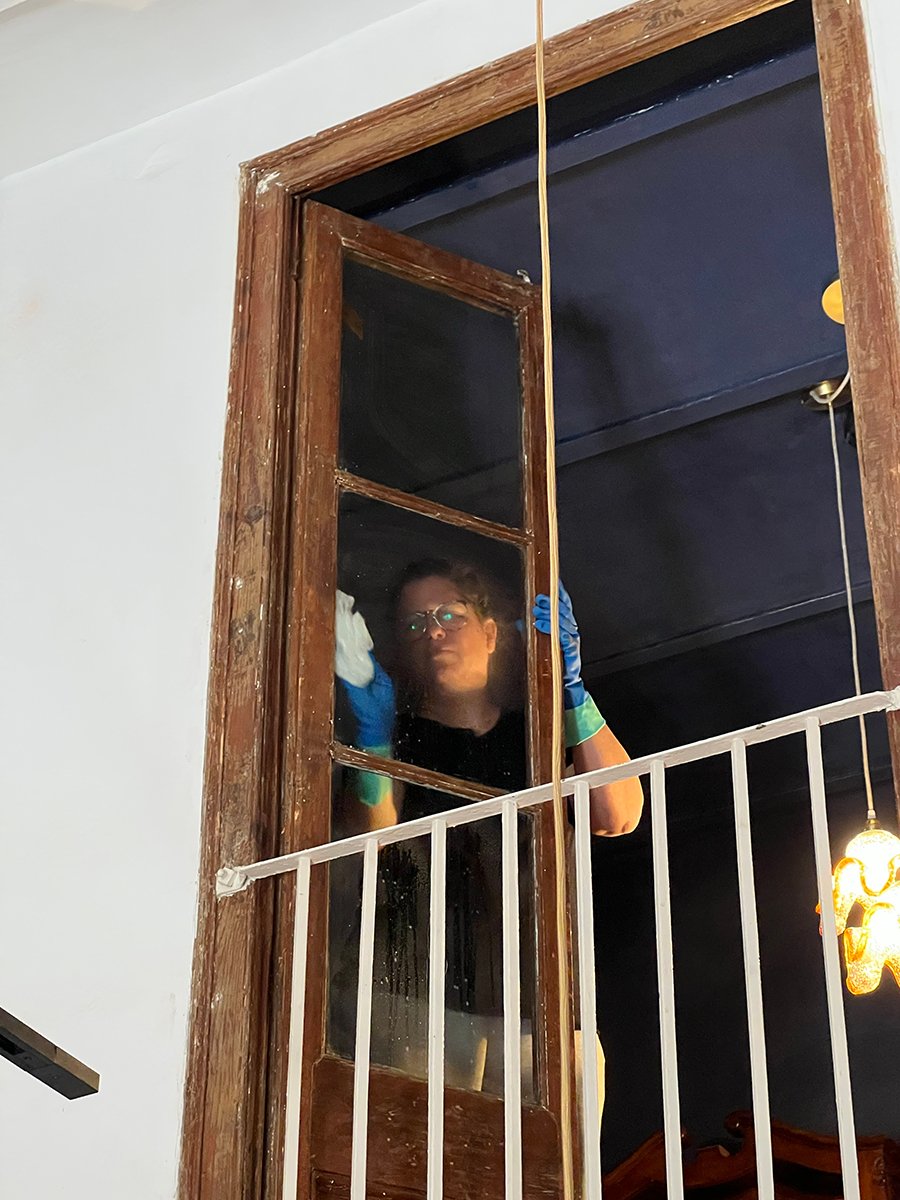
Clearing the view: restoring the original timber windows at INDOI ghar - a final touch that lets the light back in while preserving the soul of the space.
INDOI Ghar Carrer de Maria Aguiló 83, Bajos 1 08005 Poblenou, Barcelona indoi.world
Frequently asked questions
Who designed INDOI Ghar in Poblenou? RISE Design Studio, working directly with INDOI's founder Mallika Chaudhuri. The practice designed the fit-out and worked on site alongside the INDOI team through the build.
What was kept from the original building? The original terrazzo floor, found under vinyl tiles; the timber doors, stripped back to bare grain; and the masonry walls with their cracks and old repairs, finished in natural limewash rather than skimmed and painted.
What is a "bajos" in Barcelona? The ground-floor unit of a Barcelona apartment block, historically used as a workshop, store or bar. Many of Poblenou's independent shops occupy converted bajos.
How much does a fit-out like this cost? Considerably less in materials than a conventional retail refit, because most of what is in the shop was already there or bought second-hand. The cost is mainly time and labour, which suits a small business willing to be involved in the build.
Does RISE Design Studio work on shops and commercial spaces? Yes. Alongside housing, the practice works on retail, workspace and hospitality interiors in London and Barcelona, with the same fabric-first, reuse-led approach.
If you are planning a shop, studio or workspace of your own, in London or Barcelona, and you would rather uncover a space than strip it out, we'd be glad to talk it through. Please do get in touch and we can look at what your building already has to offer.
→ Email us at architects@risedesignstudio.co.uk
→ Or call the studio on 020 3947 5886
RISE Design Studio, Architects, Interior Designers + Sustainability Experts
☉ Architecture for people and planet
☉ Trading since 2011
☉ Company reg no: 08129708
☉ VAT no: GB158316403