Share this
by Sean Ronnie Hill on Aug 29, 2025
London is a city built in layers.
Walk down almost any street and you're looking at decisions made by different generations. A Georgian terrace. A Victorian rear addition. A loft conversion from the early 2000s. New solar panels appearing on roofs that were never designed for them.
The city has always adapted. The challenge now is that we're adapting under very different conditions.
Energy costs matter. Summer overheating is becoming a real concern. Buildings are responsible for a significant proportion of carbon emissions. And most of the homes we'll be living in thirty years from now have already been built.
For architects, developers and homeowners alike, the question is no longer simply what to build. It's how to improve what already exists while creating places that remain useful, comfortable and valuable for decades to come.
That's the question that sits at the centre of our work at RISE Design Studio.
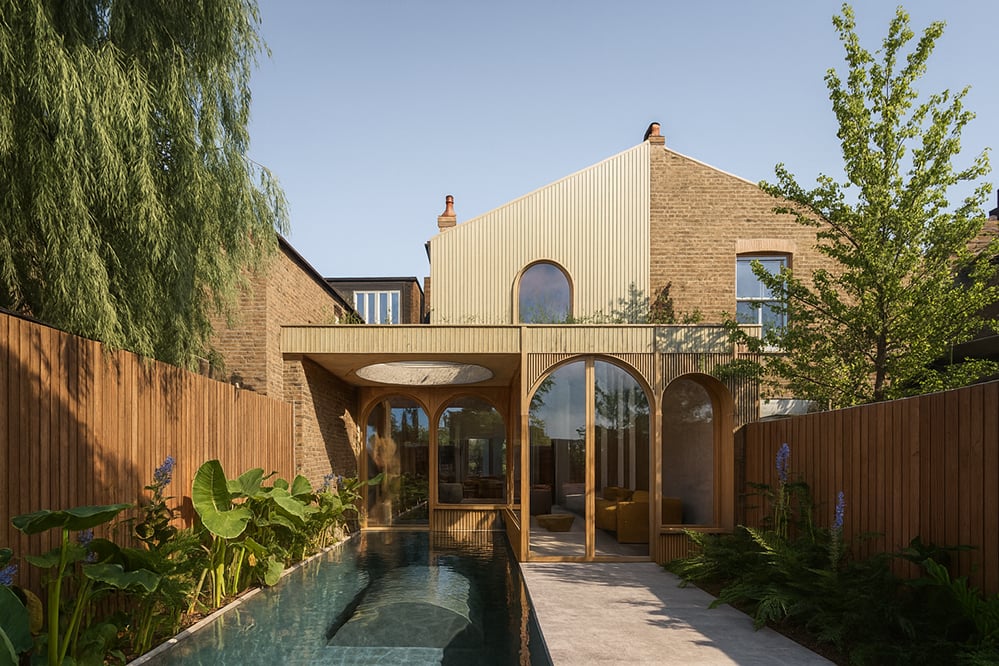
Sustainable retrofit of a London terrace house by RISE Design Studio
What Sustainable Architecture Actually Means
The word sustainable is used so often that it can start to lose its meaning.
For us, sustainability isn't a checklist of technologies. It's a way of thinking about a building over its entire life.
Most London buildings we've surveyed share similar problems. Heat escapes through poorly insulated roofs. Air leaks through dozens of small gaps hidden behind years of alterations. Rooms overheat in summer because they were never designed for the temperatures we're now experiencing.
A sustainable building addresses those fundamentals first.
It uses less energy because the fabric performs better. It creates healthier internal environments through good daylight, fresh air and stable temperatures. It considers the carbon impact of the materials used to build it. And it is designed with enough flexibility that future generations can adapt it rather than demolish it.
Many of the most sustainable projects we work on are not new buildings at all. They're existing buildings being given a second life.
Our Expertise
RISE Design Studio is led by two co-directors with complementary experience across the full spectrum of architectural scale and complexity.
Sean Ronnie Hill is a RIBA and ARB-registered architect and certified Passivhaus Designer with two decades of experience in low-energy residential and community projects across London. His work has consistently focused on fabric-first sustainable design, from whole-house EnerPHit retrofits to new builds designed to Passivhaus certification.
Imran Jahn brings a different but equally important dimension to the practice. With a background leading multi-million pound commercial and mixed-use projects, including One Bishopsgate in the City of London, Imran has the technical depth and project leadership experience to navigate complex, high-value commissions with confidence. At RISE, that experience is applied to sustainable projects at every scale, from residential extensions to community buildings, with the same rigour and ambition that large-scale developments demand.
Together they lead a studio that combines Passivhaus expertise with a strong belief in adaptive reuse.
We've never been interested in sustainability as a layer that's added at the end of a project. The most successful buildings are those where performance, materiality and architecture are working together from the outset. In our experience, separating those conversations usually leads to compromises later.
Projects Worth Knowing About
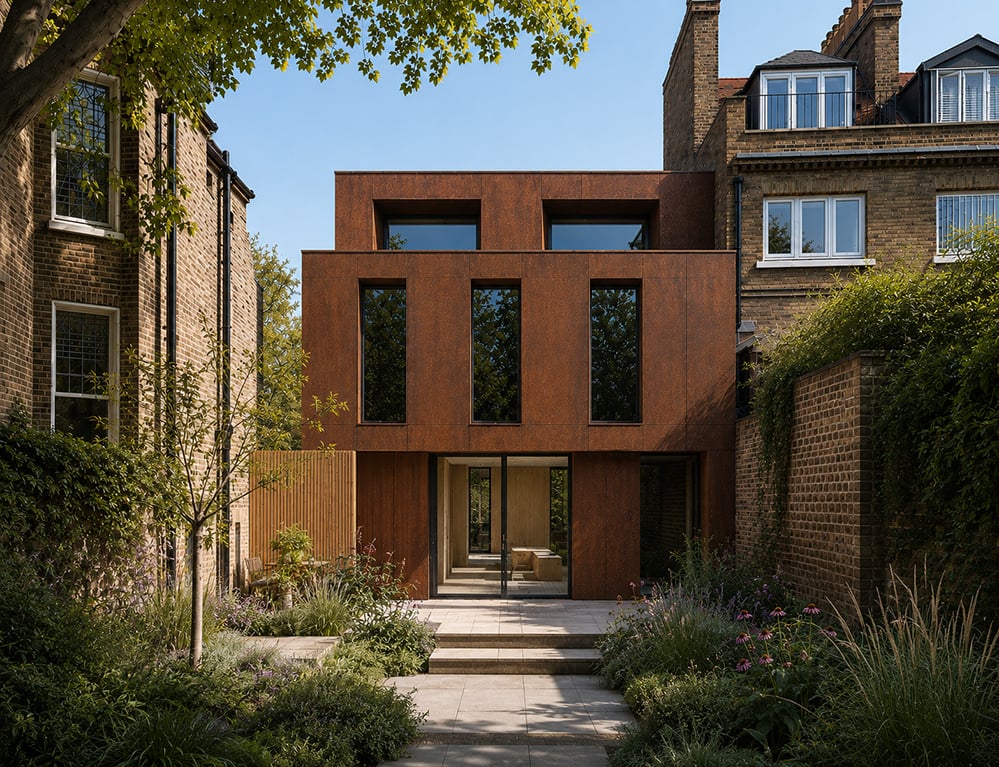
Herbert Paradise, Kensal Rise
Like many London houses, the building had been altered repeatedly over its lifetime. Rather than demolish and rebuild, we chose to work with what was already there. Through a deep retrofit following EnerPHit principles, the home's energy demand was reduced by 75%. The result doesn't announce itself as a sustainable building. It simply feels calm, comfortable and robust.
The Lexi Cinema, Kensal Rise
One of the things we enjoy most about sustainable architecture is applying the same principles to unexpected building types. A cinema presents very different challenges to a house. At The Lexi, improving comfort, air quality and energy performance became part of protecting a much-loved community building for the future.
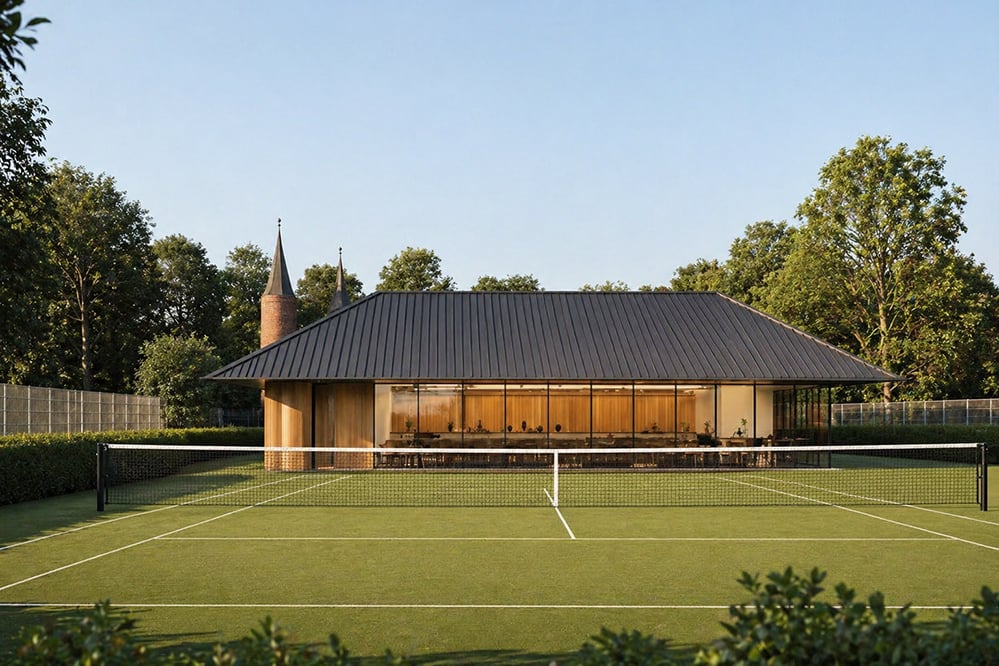
Sutton Churches Tennis Club Pavilion
Small buildings often reveal the quality of a design process more clearly than large ones. Every decision matters. The pavilion uses a simple timber structure, natural ventilation and carefully considered materials to create a welcoming community space that performs efficiently without unnecessary complexity.
These aren't showpiece projects kept separate from the day-to-day work. They're representative of how we approach every commission.
The Financial Case
We occasionally meet clients who assume sustainable design automatically means a dramatic increase in cost.
The reality is more nuanced.
Some elements cost more upfront. Triple glazing costs more than double glazing. High-performance insulation costs more than minimum compliance solutions.
But the conversation becomes very different when viewed over twenty or thirty years rather than the day construction finishes.
Many of the buildings we work on use significantly less energy than the homes they replaced or upgraded. Maintenance requirements are often lower. Comfort levels are considerably higher. Increasingly, buyers are also paying attention to operational performance in a way they rarely did ten years ago.
The question isn't simply what something costs to build. It's what it costs to own.
Technology in Its Proper Place
We integrate solar panels and battery storage, air source heat pumps, MVHR, rainwater harvesting, and low-embodied-carbon materials including CLT, recycled steel, lime plasters, and timber cladding. These systems matter and we know how to specify and integrate them properly.
But technology is the second conversation, not the first. The first is about fabric: how well the building holds heat, how controlled the air movement is, how the structure and orientation work with the climate rather than against it. Get the fabric right and the technology becomes more efficient. Skip the fabric and the technology is compensating for avoidable losses.
This sequencing is something we're direct about with clients from the outset, because it affects which decisions need to be made when.
How We Work
We start with a proper conversation about what you want the building to do, not just what you want it to look like. From there we develop a design strategy that integrates spatial thinking, energy performance, and material quality from the first sketch rather than treating them as separate workstreams.
We use 3D modelling and energy simulation throughout the design process, which means you can see and interrogate the design before anything is built. We work closely with structural engineers, energy consultants, and specialist contractors, and we maintain involvement through construction to ensure that what was designed is what gets built. The gap between design intent and built performance is where sustainable projects most often fall short. Closing that gap is a significant part of what we do.
What Sets RISE Apart
There are talented sustainable architects in London. What we'd point to at RISE is the combination of Passivhaus accreditation with a genuine commitment to design quality, a practice-wide preference for retrofit and adaptive reuse over demolition, and a track record of delivering performance-led projects at a range of scales, from a single Victorian terrace to a community cinema.
We're also honest about what we don't know and direct about where the risks and trade-offs lie on any given project. That tends to make for better working relationships and better buildings.
Building for the Future
At RISE, we don't see sustainable architecture as a specialist branch of architecture.
We see it as architecture done properly.
Buildings should be comfortable in January and comfortable in August. They should use less energy than the generation before them. They should age well. They should make sensible use of materials and resources. And they should still be beautiful places to spend time in.
London faces an enormous retrofit challenge over the coming decades. Most of the buildings that will shape the city's future are already standing today.
That's where we believe some of the most interesting architectural work is waiting to be done.
→ Email us at architects@risedesignstudio.co.uk
→ Or call the studio on 020 3947 5886
RISE Design Studio, Architects, Interior Designers + Sustainability Experts
☉ Architecture for people and planet
☉ Trading since 2011
☉ Company reg no: 08129708
☉ VAT no: GB158316403