
Share this
Why Choose RISE Design Studio as Your Sustainable Architect in London
by Sean Hill on Sep 10, 2023
London is a city that has always had to negotiate between what it inherits and what it builds next. That tension is part of what makes it interesting to work in. It's also what makes the question of sustainable architecture here more complex, and more important, than it might be elsewhere.
We started RISE Design Studio in 2011 with a straightforward intention: to build a practice where good design and genuine environmental performance were the same thing, not competing priorities. Thirteen years later that intention hasn't changed. Here's what it looks like in practice.

Sustainability as Method, Not Marketing
The word sustainable appears everywhere in architecture now. It's on practice websites, in planning statements, in developer brochures. Most of the time it means very little.
What we mean by it is specific. A sustainable building at RISE is one where the fabric performance has been modelled before construction begins. Where the insulation specification, airtightness target, and thermal bridging details have been designed rather than defaulted. Where the energy strategy was part of the first conversation, not added at the end to satisfy an EPC requirement.
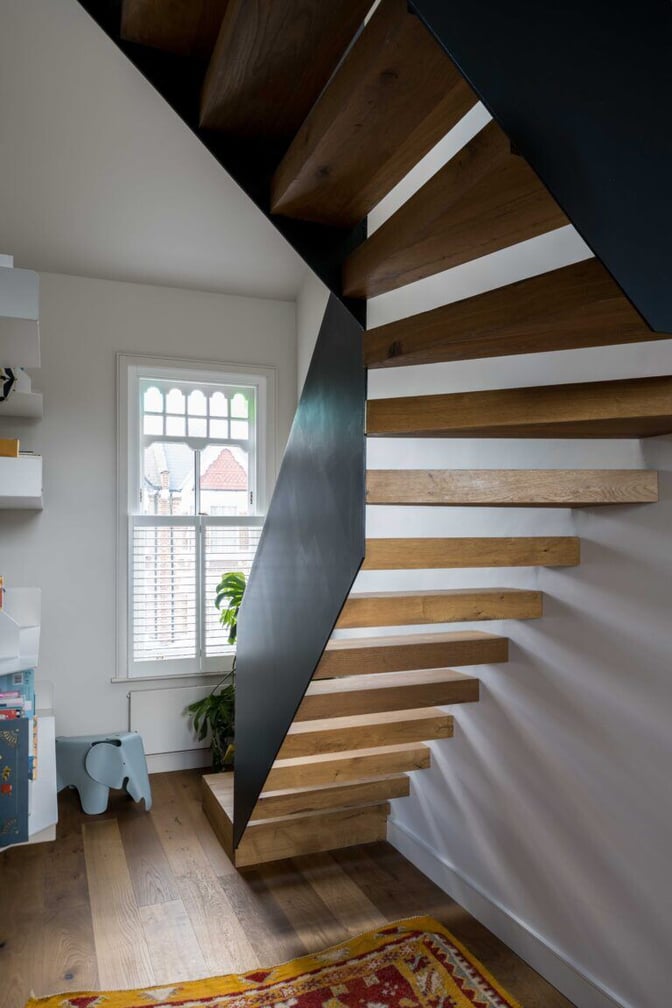
We hold Passivhaus Designer accreditation. We use the Passivhaus Planning Package to model energy performance, overheating risk, and thermal comfort on projects where it's relevant. We specify with embodied carbon in mind: European oak rather than imported hardwoods, lime plaster and clay finishes rather than synthetic alternatives, reclaimed materials where they add quality rather than compromise it.
These aren't exceptional measures. They're how we work.
Heritage and Retrofit
A significant portion of our work involves existing buildings, Victorian terraces, Edwardian semis, inter-war houses, buildings that were designed around coal fires and single glazing and have spent decades losing heat through solid walls and draughty floors.
Retrofitting these buildings well is one of the most important things the architecture profession can do. The embodied carbon in London's existing housing stock is carbon already spent. Working with it, rather than demolishing and starting again, carries a fraction of the environmental cost of new construction. It also tends to produce buildings with more character.
Our approach to retrofit starts with understanding what the building already does well and where the real losses are. Older buildings with thick walls have thermal mass that can work in your favour if the strategy is right. The position of windows, the orientation of the plan, the existing structural system: all of these are starting points for the design rather than obstacles to it.
Projects like Douglas House and the Ice Cream House in Hampstead demonstrate what a rigorous EnerPHit retrofit looks like in practice: super-insulation, airtight construction, MVHR, solar PV, and a building that performs dramatically better than its pre-retrofit state without losing the character that made it worth saving.
Technology in the Design Process
We use 3D modelling and Building Information Modelling across our projects. BIM in particular is worth explaining, because it's often misunderstood as a visualisation tool when its real value lies elsewhere.
A BIM model is a data-rich digital replica of the building. When you change a material specification, the energy performance updates. When you alter the structural strategy, the cost implications ripple through. It allows us to test decisions before they're made rather than discovering their consequences on site, and it keeps consultants and contractors working from the same information rather than different versions of the same drawings.
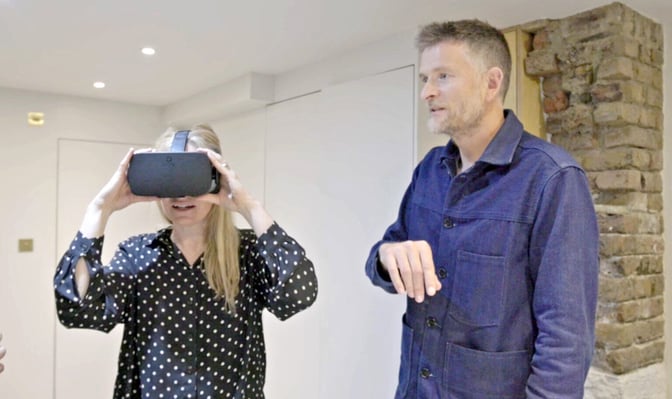
We also use VR to allow clients to experience their design before construction begins. This is genuinely useful, not as a presentation tool but as a decision-making one. The number of times a client has stood in their virtual kitchen and immediately identified something they wanted to change tells you everything about the gap between what a drawing communicates and what a space actually feels like.
Planning in London
London's planning system is one of the more complex environments to work in. Conservation areas, listed buildings, Article 4 directions, neighbouring amenity considerations, daylight and sunlight assessments: the layers of policy that apply to a typical residential project in inner London are considerable.
We've built a significant part of our practice on planning applications that others had already tried and failed. That track record comes from doing the research thoroughly, understanding the specific policy context of each site, designing around real constraints rather than hoping they'll be overlooked, and making planning arguments that anticipate objections rather than reacting to them.
For clients who want to check a practice's planning track record before appointing them, it's straightforward: search the architect's name on the local council's planning portal. The history is public. You can see what they've applied for, where, and what the outcomes were.
The Outdoor Environment
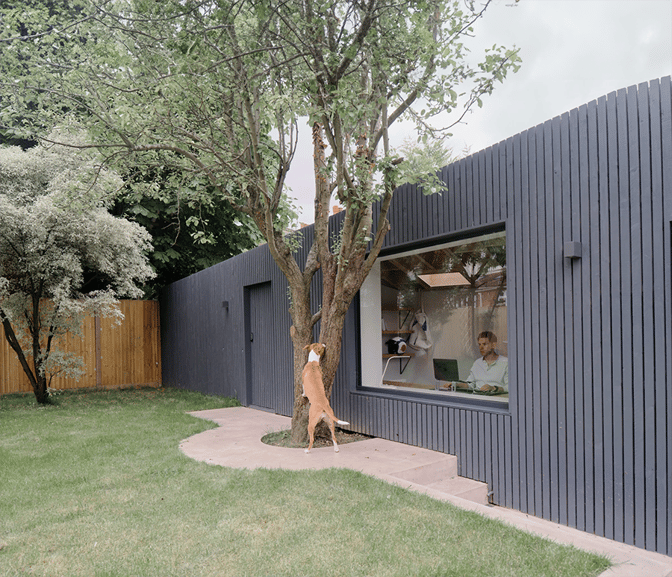
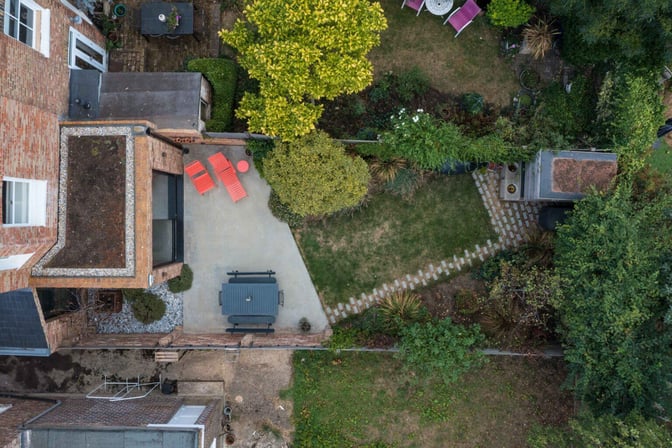
Sustainable design extends to how a building relates to its site and its immediate landscape. We pay attention to this, both because it affects the building's environmental performance and because the quality of outdoor space matters to the people who use it.
Native planting reduces water consumption and supports local biodiversity in ways that ornamental planting typically doesn't. Tree positioning affects solar gain and shading in ways that should be designed rather than left to chance. Green roofs and sustainable drainage systems manage rainfall in ways that reduce pressure on combined sewers, which in London is a real and growing problem.
These aren't decorative considerations. They're part of how a building sits in its environment and how it performs over time.
The Financial Case
We're direct about this because it matters: sustainable design costs more upfront in some respects and less in others, and the long-term arithmetic is strongly in its favour.
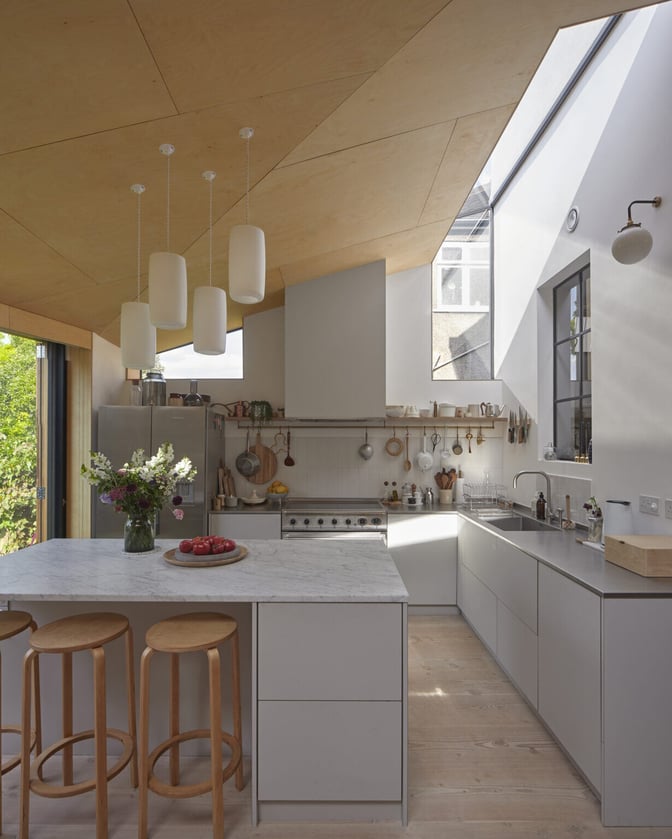
A well-insulated, airtight building with a heat pump and solar costs less to run, sometimes significantly less. In projects we've worked on, the combination of high-performance fabric, solar generation, and battery storage has shifted households from substantial monthly energy costs to near-zero in summer. Over the lifetime of a building those numbers compound considerably.
There's also a growing body of evidence that EPC ratings are increasingly legible to buyers in the London property market. A home with an A or B rating and a recent heat pump installation is a materially different asset to one with an E or F. That gap is widening.
And the cost of getting fabric performance wrong, of a building that overheats in summer and loses heat in winter, accrues over decades. The question isn't really "how much does sustainable design cost?" It's "what does it cost not to bother?"
What We're Actually Like to Work With
We're a small practice. That means the people you meet when you first talk to us are the people who work on your project. It also means we're selective about what we take on, because we'd rather do fewer projects well than spread ourselves too thin.
We're direct. If your budget and your ambitions aren't aligned, we'll tell you at the outset. If a design direction isn't working, we'll say so. If a contractor's programme looks unrealistic, we'll flag it before it becomes a problem rather than after.
We're interested in the whole project, not just the parts that get photographed. The technical drawing package, the specification, the tender process, the contract administration during construction: these are where a significant amount of value is created or lost, and we stay engaged through all of them.
Building for London's Future
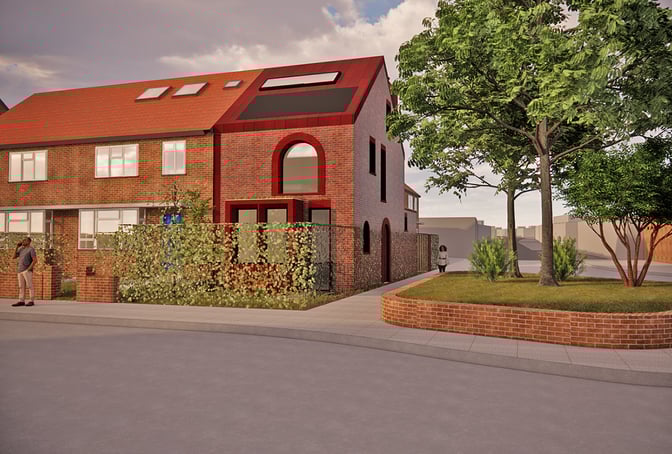
The city needs to retrofit the vast majority of its existing housing stock and build its new homes to standards that are currently unusual rather than standard. That work is already underway, and it will accelerate as energy costs, regulatory standards, and buyer expectations all continue to move in the same direction.
At RISE, we think the distinction between sustainable architecture and good architecture is largely a false one. Buildings that are warm in winter, cool in summer, healthy to live in, cheap to run, and built from honest materials are simply better buildings. The environmental performance isn't a separate objective. It's part of what makes them worth building.
If you're planning a project, whether a new build, an extension, a retrofit, or something more complex, we'd be glad to have a conversation about what it could be.
→ Email us at architects@risedesignstudio.co.uk
→ Or call the studio on 020 3947 5886
RISE Design Studio, Architects, Interior Designers + Sustainability Experts
☉ Architecture for people and planet
☉ Trading since 2011
☉ Company reg no: 08129708
☉ VAT no: GB158316403

Share this
- Sustainable architecture (163)
- Architecture (150)
- Passivhaus (72)
- Design (67)
- Sustainable Design (67)
- Retrofit (60)
- London (52)
- New build (52)
- Renovation (44)
- energy (39)
- interior design (37)
- Building materials (35)
- Planning (34)
- Environment (31)
- climate-change (30)
- enerphit (29)
- Inspirational architects (27)
- Refurbishment (27)
- extensions (27)
- low energy home (23)
- Building elements (22)
- Inspiration (21)
- London Architecture (16)
- Rise Projects (16)
- Extension (15)
- Innovative Architecture (14)
- Sustainable Architect (14)
- net zero (14)
- Carbon Zero Homes (13)
- Planning permission (13)
- General (12)
- Philosophy (12)
- sustainable materials (12)
- RIBA (11)
- Working with an architect (11)
- Awards (9)
- Residential architecture (9)
- Sustainable (9)
- architects (9)
- Sustainable Tennis Pavilion (8)
- architect (8)
- low carbon (8)
- Tennis Pavilion (7)
- Virtual Reality (7)
- Airtightness (6)
- BIM (6)
- Eenergy efficiency (6)
- Overheating (6)
- Passive house (6)
- Uncategorized (6)
- BIMx (5)
- Backland Development (5)
- Basement Extensions (5)
- Carbon Positive Buildings (5)
- Community Architecture (5)
- Costs (5)
- RISE Sketchbook Chronicles (5)
- cinema design (5)
- construction (5)
- insulation (5)
- local materials (5)
- modular architecture (5)
- sustainable building (5)
- AECB (4)
- ARB (4)
- Feasibility Study (4)
- Home extensions (4)
- House cost (4)
- Notting Hill Architects (4)
- Paragraph 84 (4)
- Timber Structures (4)
- concrete (4)
- constructioncosts (4)
- mvhr (4)
- natural materials (4)
- structural (4)
- structuralengineer (4)
- working from home (4)
- Artificial Intelligence (AI) (3)
- Brutalist Architecture (3)
- Building in the Green Belt (3)
- Chartered architect (3)
- Clay Plaster (3)
- Construction Costs (3)
- Fees (3)
- Heat Pumps (3)
- Home improvement (3)
- Low Energy Architecture (3)
- Low Energy Homes (3)
- Low-Energy Design (3)
- New Build House (3)
- Paragraph 79 (3)
- Paragraph 80 (3)
- Permitted development (3)
- Property (3)
- Queen's Park Sustainable Architect (3)
- Social housing (3)
- Spain (3)
- Sustainable Architect London (3)
- Sustainable Extensions (3)
- Sustainable Interiors (3)
- Sustainable Natural Materials (3)
- Timber Construction (3)
- backland (3)
- building regulations (3)
- circular economy (3)
- country house (3)
- countryside (3)
- furniture (3)
- house extension (3)
- listed buildings (3)
- plywood (3)
- rear extension (3)
- self build (3)
- stoke newington (3)
- sustainability (3)
- sustainable structure (3)
- victorian terrace (3)
- zero waste (3)
- 3D models (2)
- Architects in Spain (2)
- BREEAM (2)
- Bespoke lighting (2)
- Biophilic Design (2)
- Bricks (2)
- Building energy (2)
- CLT (2)
- Chartered Practice (2)
- Commercial Architecture (2)
- Contractor (2)
- Covid-19 (2)
- Designing with Stone (2)
- Ecohouse (2)
- EnerPHit London (2)
- Furniture design (2)
- Garden studio (2)
- Hackney (2)
- Hampstead Architects (2)
- Heritage (2)
- Japanese Archiecture (2)
- Kensal Rise (2)
- Loft conversion (2)
- Low Carbon Future (2)
- Mass Timber (2)
- Mews House Retrofit (2)
- Modern Methods of Construction (2)
- North London Architects (2)
- Paragraph 84 home (2)
- Passivhaus London (2)
- Period Homes (2)
- Permitted development rights (2)
- Recycling (2)
- Residential Architects London (2)
- Roof extension (2)
- Rural New Build (2)
- Social Distancing (2)
- Store Design (2)
- Sustainable Affordable Homes (2)
- Sustainable Architect Fees (2)
- Sustainable Architecture London (2)
- Tennis Club Architecture (2)
- Welbeing (2)
- West London Architect (2)
- Whole Life Carbon (2)
- Winter Performance (2)
- ashp (2)
- barcelona (2)
- building information modelling (2)
- co-working (2)
- countryside architecture (2)
- design&build (2)
- epc (2)
- glazed-extensions (2)
- green architecture (2)
- greenbelt (2)
- hampstead (2)
- health and wellbeing (2)
- historic architecture (2)
- home extension (2)
- interiorfinishes (2)
- light (2)
- living space (2)
- london landmarks (2)
- londoncinemas (2)
- openingupworks (2)
- peter zumthor (2)
- project management (2)
- rammed earth (2)
- renewable energy (2)
- rural architecture UK (2)
- traditional (2)
- trialpits (2)
- waste (2)
- wooden furniture (2)
- #NLANetZero (1)
- 3D Printing (1)
- 3D Walkthroughs (1)
- AECB CarbonLite (1)
- AI and Architecture (1)
- Adobe (1)
- Agriculture and Architecture (1)
- Alvar (1)
- Appointing an Architect (1)
- Architect Barcelona (1)
- Architects Fees UK (1)
- Architectural Research (1)
- Architecture Interior Design (1)
- Architecture London (1)
- Architraves (1)
- Area (1)
- Art (1)
- Audio Visual (1)
- Balconies (1)
- Biodiversity (1)
- Biomimicry (1)
- Biophilic Architecture (1)
- Birmingham Selfridges (1)
- Boat building (1)
- Boats (1)
- Brass (1)
- Brent Planning (1)
- Brexit (1)
- Brownfield Development (1)
- Building Insulation (1)
- Café Design (1)
- Cantilevered Roof (1)
- Carpentry (1)
- Casting (1)
- Chailey Brick (1)
- Cold Water Swimming (1)
- Concrete Architecture (1)
- Conservation Area Architects (1)
- Contemporary Architecture (1)
- Contemporary Architecture Hampstead (1)
- Copper (1)
- Cornices (1)
- Corten (1)
- Cowboy Builders (1)
- Czech Republic, (1)
- Data Centers (1)
- David Hockney (1)
- David Lea (1)
- Digital Twin (1)
- Domus Nova (1)
- Dormer extension (1)
- EPC Rating (1)
- Elmwood Lawn Tennis Club (1)
- Embodied Carbon (1)
- Energy Performance (1)
- EnvironmentalArchitecture (1)
- Fabric First (1)
- Flooding (1)
- Future of Housing (1)
- Gandhi memorial museum (1)
- Georgian Extension (1)
- Green Mortgage (1)
- Green Register (1)
- Green infrastructure (1)
- GreenDesign (1)
- Heritage Retrofit (1)
- History (1)
- Home Retrofit (1)
- House Extension Architect (1)
- India (1)
- Interior Finishes (1)
- Jan Kaplický (1)
- Japandi (1)
- Joinery (1)
- Kensal Rise Architects (1)
- Kitchen Design (1)
- L-shaped dormer (1)
- Land value (1)
- Leonardo Da Vinci (1)
- Lime render (1)
- Listed Building Architects (1)
- London Architect (1)
- London Architects (1)
- Lord's Media Centre (1)
- Low-Carbon Architecture (1)
- Low-Energy Buildings (1)
- Mapping (1)
- Marseilles (1)
- Mary Portas (1)
- Metal (1)
- Micro Generation (1)
- Mid Century Retrofit (1)
- Modern House Extension (1)
- Monuments (1)
- Mouldings (1)
- Museum Architecture (1)
- Mycelium Architecture (1)
- NPPF (1)
- Nature (1)
- Nature-Led Design (1)
- Net Zero Architecture (1)
- New Build Architects (1)
- North London (1)
- North West London (1)
- Office to Homes (1)
- Office to Hotel Conversion (1)
- Offsite manufacturing (1)
- Origami (1)
- Padel Court (1)
- Party Wall Surveyor (1)
- Passivhaus Architects London (1)
- Passivhaus Design (1)
- Pavilion Architecture (1)
- PeopleFirstDesign (1)
- Place (1)
- Podcast (1)
- Porch (1)
- Prefab (1)
- Pro bono (1)
- Procurement (1)
- Public Housing (1)
- Queen's Park (1)
- RBKC architects (1)
- RISE Insight (1)
- RISE Team (1)
- Rebuild (1)
- Reclaimed Brick Architecture (1)
- Regenerative Architecture (1)
- Replacement Dwelling (1)
- ResilientFuture (1)
- Richard Rogers (1)
- Sand (1)
- Scallop House (1)
- Scandinavian architecture (1)
- Selfbuild (1)
- Skirting (1)
- Slow Architecture (1)
- Small Sites Development (1)
- Solar Shading (1)
- Sports Architecture (1)
- Sports Pavilion Design (1)
- Steel (1)
- Stone Architecture (1)
- Surveying (1)
- Sustainable Basement Extension (1)
- Sustainable Building Systems (1)
- Sustainable Housing (1)
- Sustainable Lighting (1)
- Sustainable Mews House (1)
- Sustainable Padel Court (1)
- Sustainable Retail Store (1)
- Sustainable Retrofit (1)
- Sutton Churches Tennis Club (1)
- Sverre fehn (1)
- UFH (1)
- VR (1)
- Victorian Extension (1)
- Walkable Cities (1)
- West london (1)
- Wildlife (1)
- Winston Road N16 (1)
- Wood (1)
- architect Kensington Chelsea (1)
- architect fees (1)
- architectural details (1)
- arne jacobsen (1)
- avant garde (1)
- basements (1)
- biophilic design London (1)
- brentdesignawards (1)
- building design (1)
- built environment (1)
- carbonpositive (1)
- cement (1)
- charles correa (1)
- charles eames (1)
- charlie warde (1)
- charteredarchitect (1)
- circular rooflight (1)
- climate (1)
- climate action (1)
- codes of practice (1)
- collaboration (1)
- covid (1)
- curved architecture (1)
- dezeenawards (1)
- drone (1)
- eco home design (1)
- eco-living (1)
- emissions (1)
- finnish architecture (1)
- foundations (1)
- futuristic (1)
- georgian architecture (1)
- glazed envelope (1)
- good working relationships (1)
- green building (1)
- happiness (1)
- homesurveys (1)
- imperfection (1)
- independentcinemas (1)
- innovation (1)
- inspirational (1)
- internal windows (1)
- jean prouve (1)
- kindness economy (1)
- kintsugi (1)
- kitchen extension Notting Hill (1)
- landscape architecture (1)
- lime (1)
- local (1)
- lockdown (1)
- mansard (1)
- manufacturing (1)
- materiality (1)
- modern architecture (1)
- moderninst (1)
- modernism (1)
- modular architect London (1)
- moulded furniture (1)
- natural (1)
- natural cooling (1)
- natural light (1)
- natural materials architecture (1)
- new build architect Sussex (1)
- nordic pavilion (1)
- northern ireland (1)
- palazzo (1)
- placemaking (1)
- planningpermission (1)
- plywood kitchen (1)
- post-Covid (1)
- poverty (1)
- powerhouse (1)
- preapp (1)
- preapplication (1)
- ray eames (1)
- reclaimed bricks (1)
- recycle (1)
- reuse (1)
- ricardo bofill (1)
- risedesignstudio (1)
- rooflights (1)
- room reconfiguration (1)
- rural (1)
- satellite imagery (1)
- selfbuildhouse (1)
- shared spaces (1)
- site-progress (1)
- solarpvs (1)
- space (1)
- stone (1)
- structuralsurvey (1)
- sun tunnel (1)
- sustainable home design (1)
- terraces (1)
- thegreenregister (1)
- totality (1)
- wabi-sabi (1)
- May 2026 (1)
- April 2026 (2)
- March 2026 (8)
- February 2026 (5)
- January 2026 (4)
- December 2025 (10)
- November 2025 (14)
- October 2025 (9)
- September 2025 (10)
- August 2025 (13)
- July 2025 (23)
- June 2025 (10)
- May 2025 (22)
- April 2025 (16)
- March 2025 (8)
- February 2025 (12)
- January 2025 (6)
- December 2024 (6)
- November 2024 (8)
- October 2024 (5)
- September 2024 (3)
- August 2024 (2)
- July 2024 (2)
- June 2024 (2)
- May 2024 (1)
- April 2024 (1)
- March 2024 (1)
- February 2024 (1)
- January 2024 (3)
- November 2023 (1)
- October 2023 (5)
- September 2023 (7)
- August 2023 (7)
- July 2023 (6)
- June 2023 (8)
- May 2023 (14)
- April 2023 (11)
- March 2023 (8)
- February 2023 (6)
- January 2023 (5)
- December 2022 (3)
- November 2022 (3)
- October 2022 (3)
- September 2022 (3)
- July 2022 (2)
- June 2022 (1)
- May 2022 (1)
- April 2022 (1)
- March 2022 (1)
- February 2022 (2)
- January 2022 (1)
- November 2021 (1)
- October 2021 (2)
- July 2021 (1)
- June 2021 (1)
- May 2021 (1)
- April 2021 (1)
- March 2021 (1)
- February 2021 (1)
- January 2021 (2)
- December 2020 (1)
- November 2020 (1)
- October 2020 (1)
- September 2020 (2)
- August 2020 (1)
- June 2020 (3)
- April 2020 (3)
- March 2020 (2)
- February 2020 (3)
- January 2020 (1)
- December 2019 (1)
- November 2019 (2)
- September 2019 (1)
- June 2019 (1)
- April 2019 (2)
- January 2019 (2)
- October 2018 (1)
- September 2018 (1)
- August 2018 (2)
- July 2018 (1)
- March 2018 (1)
- February 2018 (2)
- December 2017 (1)
- September 2017 (1)
- May 2017 (1)
- January 2017 (1)
- December 2016 (1)
- November 2016 (1)
- September 2016 (1)
- August 2016 (2)
- June 2016 (2)
- May 2016 (1)
- April 2016 (1)
- December 2015 (1)
- October 2015 (1)
- September 2015 (1)
- August 2015 (1)
- June 2015 (1)
- January 2015 (1)
- September 2014 (2)
- August 2014 (1)
- July 2014 (4)
- June 2014 (9)
- May 2014 (2)
- April 2014 (1)
- March 2014 (1)
- February 2014 (1)
- December 2013 (1)
- November 2013 (5)
- October 2013 (5)
- September 2013 (5)
- August 2013 (5)
- July 2013 (5)
- June 2013 (2)
- May 2013 (2)
- April 2013 (4)
- March 2013 (5)
- February 2013 (2)
- January 2013 (3)